






What's Happening?
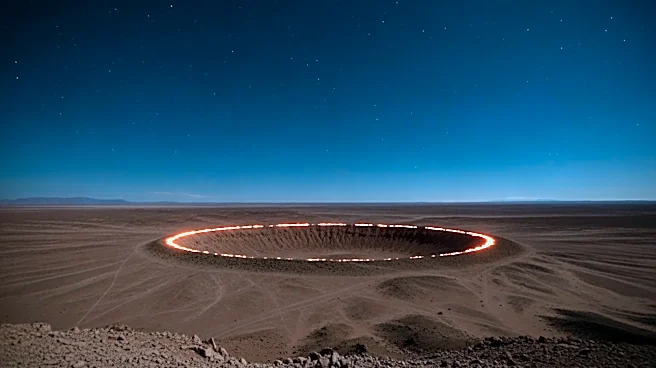
The Darvaza gas crater in Turkmenistan, famously known as the 'Gates to Hell,' is experiencing a significant reduction in its fiery intensity. According to a report by Jenny Gross for the New York Times, new infrared data from Capterio, a firm specializing
in tracking gas flares, indicates that the heat from the crater has decreased by over 75% in the past three years. The Turkmen government has expressed a desire to extinguish the flames due to environmental and health concerns, attributing the reduction to nearby gas wells drilled in 2024. However, Capterio's data suggests that the decline in intensity began earlier, complicating the understanding of the exact causes behind the phenomenon.
Why It's Important?
The reduction in the Darvaza gas crater's flames is significant for both environmental and geopolitical reasons. The crater has been a major tourist attraction, drawing visitors from around the world, and its diminished intensity could impact tourism revenue. Environmentally, the reduction in gas flaring aligns with global efforts to decrease greenhouse gas emissions, which contribute to climate change. The Turkmen government's interest in extinguishing the flames reflects a broader commitment to environmental health and safety. However, the unclear causes of the reduction highlight the complexities of managing natural gas resources and the need for accurate data to inform policy decisions.
What's Next?
The future of the Darvaza gas crater remains uncertain as stakeholders, including the Turkmen government and environmental organizations, consider the next steps. Potential actions could include further investigation into the causes of the reduced flames and the implementation of measures to either reignite or permanently extinguish the crater. The outcome will likely influence Turkmenistan's environmental policies and its international reputation regarding natural resource management. Additionally, the situation may prompt discussions on the balance between preserving natural wonders and addressing environmental concerns.