



What's Happening?
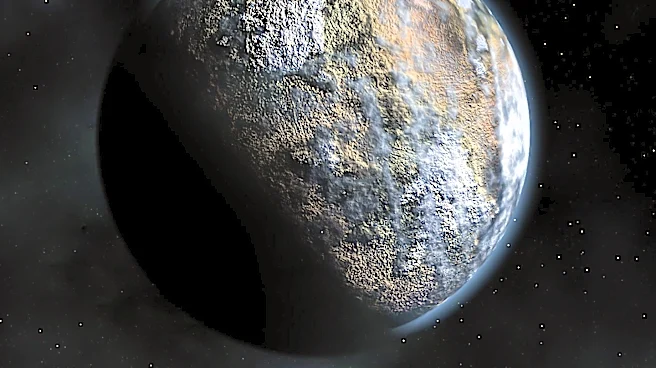
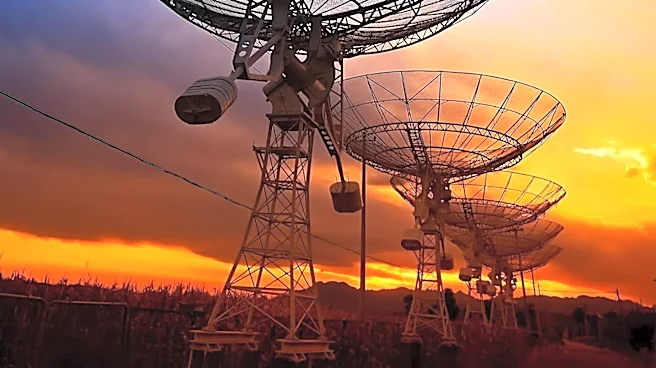
Scientists have detected signs of an atmosphere on LHS 1140b, a rocky exoplanet located 49 light-years from Earth. This discovery was made using the Magellan Clay telescope at Las Campanas Observatory in Chile, where helium was observed escaping from the planet's
atmosphere. LHS 1140b, classified as a 'super-Earth,' is situated in the habitable zone of its star, suggesting conditions that could support liquid water. The planet's composition is believed to include an iron core and a silicate mantle, with potential low-density components such as water and an atmosphere. This finding marks a significant step in the study of exoplanets, as it could be the first confirmed atmosphere on a rocky planet in a habitable zone.
Why It's Important?
The detection of an atmosphere on LHS 1140b is crucial for understanding the potential for life beyond Earth. If confirmed, this would be the first known atmosphere on a rocky exoplanet in a habitable zone, providing a promising target for future studies of extraterrestrial life. The presence of helium suggests that other gases, possibly including oxygen, might be present, which are essential for life as we know it. This discovery also highlights the capabilities of current astronomical technologies and methodologies in identifying and studying distant worlds, paving the way for more detailed investigations into the atmospheres of exoplanets.
What's Next?
Further observations are planned to confirm the presence of an atmosphere on LHS 1140b and to identify other potential gases. The James Webb Space Telescope and other observatories are expected to focus on this exoplanet to gather more data. Researchers aim to understand why helium was detected in initial observations but not in subsequent ones, which could provide insights into atmospheric dynamics. The study of LHS 1140b will continue to be a priority for astronomers seeking to explore the conditions necessary for life on other planets.