
What's Happening?
Archaeologists have discovered the first shipwrecks linked to the Pirates of the Caribbean in Nassau Harbor, The Bahamas. The New Providence Pirates Expedition and Wreckwatch TV uncovered six wreck sites,
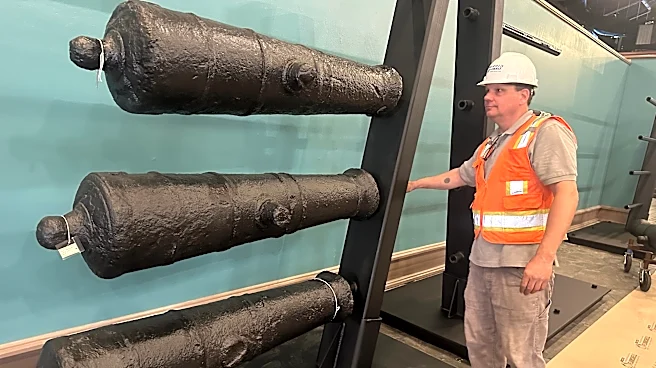
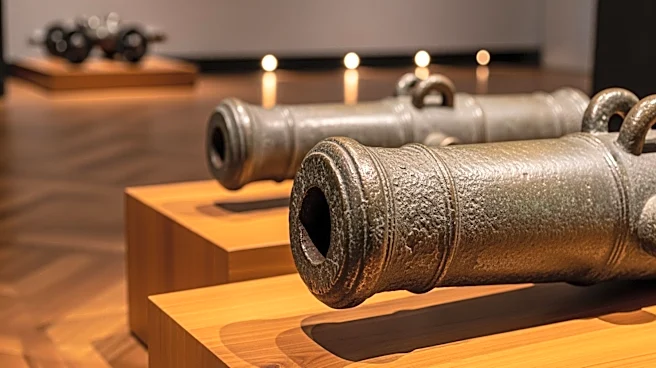
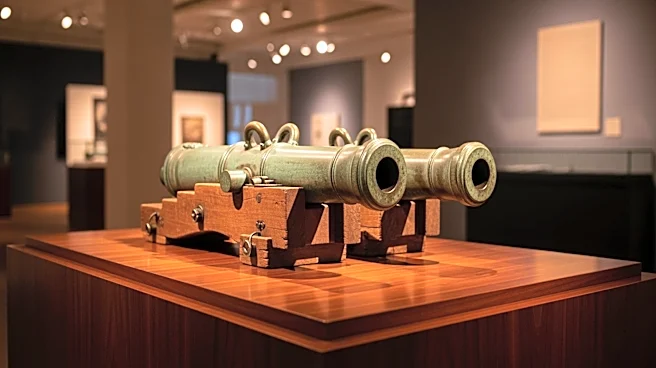
three of which date back to the Golden Age of Piracy in the late 1600s to early 1700s. These findings provide a rare glimpse into the maritime world of historical pirates. The team faced challenges such as strong tidal currents and shark-infested waters. Artifacts found include iron cannons, lead musket balls, and clay tobacco pipes, offering insights into pirate life and trade in the region.
Why It's Important?
The discovery of these shipwrecks is significant as it sheds light on the real-life operations of pirates, a topic often romanticized in popular culture. The findings help historians understand the daily lives, ship construction, and trade practices of pirates during the Golden Age of Piracy. This research contributes to a more accurate historical narrative, moving beyond fictional portrayals. The artifacts and ship remains provide tangible evidence of the economic and social dynamics of the time, highlighting the impact of piracy on trade and colonial expansion in the Caribbean.
What's Next?
The findings from the New Providence Pirates Expedition will be featured in Wreckwatch Magazine and a documentary series on Wreckwatch TV. These publications aim to present a historically accurate depiction of Nassau's pirate settlement around 1715. The research team plans to continue exploring the area, using historical maps and documents to uncover more about the pirate era. The discoveries may lead to further archaeological investigations and preservation efforts, enhancing our understanding of maritime history and the cultural heritage of The Bahamas.