



What's Happening?
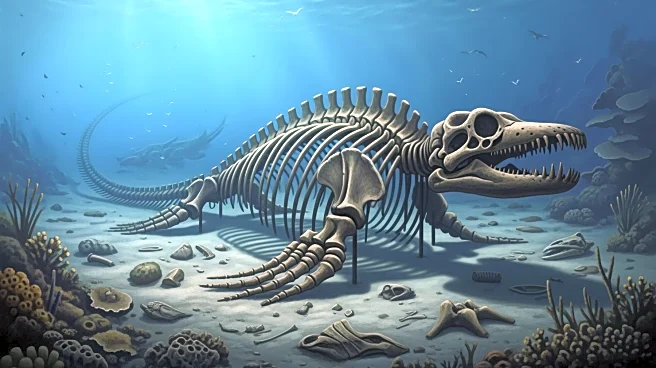
A significant fossil discovery on the southwest coast of England has led scientists to identify a new prehistoric marine species, potentially the largest marine reptile ever recorded. The fossil, a lower jawbone over two meters long, belongs to a newly
named giant ichthyosaur species, Ichthyotitan severnensis. The bone was discovered in 2020 by 11-year-old Ruby Reynolds during a fossil-hunting trip in Somerset. Researchers from the University of Bristol and University of Manchester analyzed the fossils, confirming shared characteristics with a previously unearthed jaw fragment found in 2016. The analysis suggests the marine reptile may have reached a total body length of approximately 25 meters, comparable to today's blue whales. The findings were published in a peer-reviewed study in PLOS ONE, highlighting the fossil's exceptional size and shared geological context.
Why It's Important?
The discovery of Ichthyotitan severnensis provides valuable insights into the size and growth patterns of prehistoric marine reptiles. This finding contributes to the understanding of marine life during the Triassic period, just before the Triassic-Jurassic extinction event. The research suggests that some ichthyosaurs attained extreme sizes under favorable environmental conditions, offering a glimpse into the evolutionary history of marine reptiles. The study also highlights the importance of fossil records in reconstructing past ecosystems and understanding the impact of extinction events on marine biodiversity. This discovery may influence future paleontological research and conservation efforts by providing a deeper understanding of the ecological roles once held by ichthyosaurs.
What's Next?
Further research is expected to focus on additional bones recovered near the Blue Anchor site, including vertebrae and ribs, to determine their connection to the jaw specimen. Scientists may continue to explore the Westbury Mudstone Formation for more fossils that could provide additional insights into the size and characteristics of Ichthyotitan severnensis. The study's findings may prompt further investigations into the environmental conditions that allowed ichthyosaurs to reach such sizes, potentially influencing conservation strategies for modern marine species. Researchers may also examine the implications of the Triassic-Jurassic extinction event on marine life, contributing to broader discussions on biodiversity and climate change.