





What's Happening?
A new weather guide from Breliio provides a comprehensive explanation of how clouds form, their various types, and their significant role in Earth's weather patterns. The guide clarifies that clouds are composed of tiny water droplets or ice crystals,
not cotton or smoke, and their formation involves the processes of evaporation and condensation. Evaporation occurs when the sun warms water on Earth's surface, turning it into invisible water vapor that then rises. As this water vapor ascends into cooler air, it condenses around microscopic particles like dust, forming visible cloud droplets. The guide details why some clouds appear white (due to sunlight scattering) and others gray (indicating thickness and water content, often preceding rain). It also introduces common cloud types such as cumulus, stratus, cirrus, and cumulonimbus, and explains that fog is essentially a cloud at ground level. The movement and changing shapes of clouds are attributed to air currents and varying wind directions at different altitudes.
Why It's Important?
Understanding cloud dynamics is crucial for various sectors, including agriculture, aviation, and daily life planning. For agriculture, accurate weather predictions based on cloud observation can inform planting and harvesting schedules, protecting crops from adverse conditions. In aviation, cloud types and altitudes are critical for flight safety and planning, as they can indicate turbulence, icing, or reduced visibility. For the general public, recognizing cloud patterns provides valuable clues about impending weather changes, such as rain or storms, enabling better preparation for outdoor activities or travel. The guide emphasizes that clouds are integral to the water cycle, facilitating precipitation and influencing global temperatures by providing shade and reflecting sunlight. Without clouds, Earth's climate and ecosystems would be drastically different, impacting water resources, biodiversity, and human settlements.
What's Next?
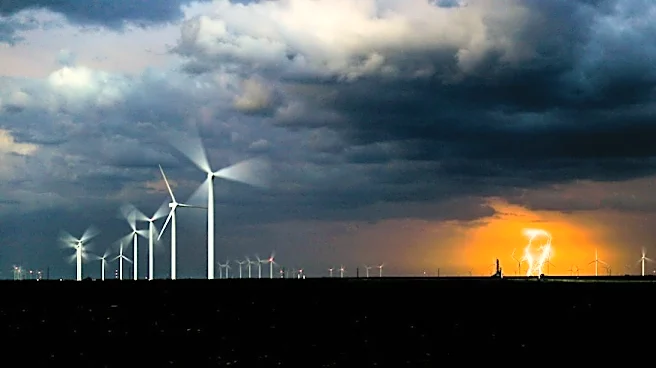
The Breliio guide encourages readers, particularly children, to engage in cloud-watching activities to observe and understand these atmospheric phenomena firsthand. This hands-on approach aims to foster a deeper appreciation for meteorology and environmental science. Future educational initiatives might build upon such guides to integrate more interactive tools or citizen science projects, allowing individuals to contribute to broader meteorological data collection. Continued research into cloud microphysics and their interaction with climate change will also be essential. As climate patterns evolve, understanding how clouds respond and influence these changes will be vital for developing more accurate climate models and adaptation strategies. The guide's emphasis on safety during stormy weather, particularly regarding lightning, underscores the ongoing need for public awareness campaigns about weather hazards.
Beyond the Headlines
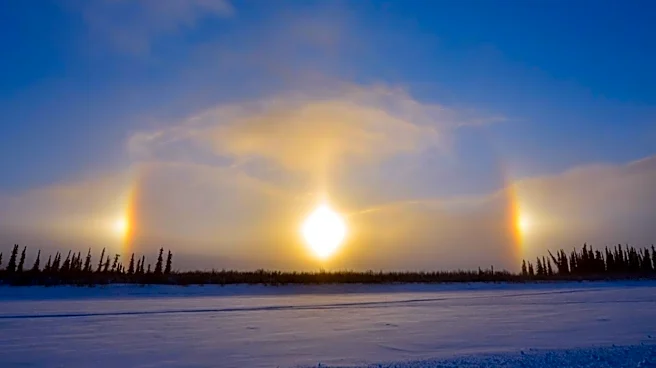
Beyond their scientific importance, clouds hold significant cultural and aesthetic value, inspiring art, literature, and photography. The guide touches upon the beauty of sunrises and sunsets enhanced by clouds, highlighting their role in shaping our visual experience of the sky. Ethically, the study of clouds contributes to our understanding of Earth's delicate atmospheric balance, prompting considerations about human impact on climate and the environment. The guide's simplified explanations make complex scientific concepts accessible, promoting scientific literacy from a young age. This foundational knowledge can empower future generations to engage with environmental challenges and contribute to sustainable practices. The continuous, dynamic nature of clouds also serves as a metaphor for constant change and the interconnectedness of natural systems, offering a broader perspective on the world around us.