



What's Happening?
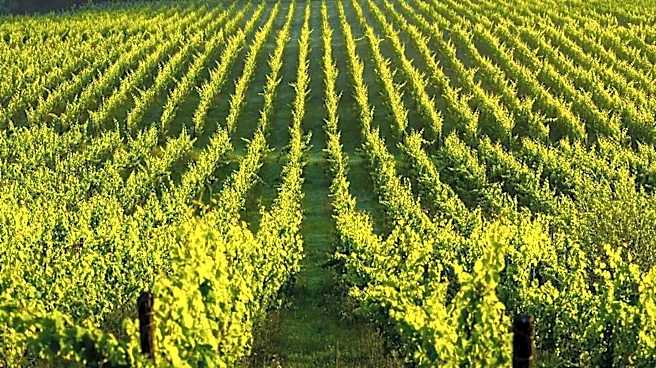
Winemakers in northern Michigan are increasingly concerned about the impact of wildfire smoke on their vineyards. Recent smoke from wildfires in Canada and Minnesota briefly affected the region, raising fears about potential 'smoke taint' in grapes. This
phenomenon can impart unwanted flavors to wine, such as those reminiscent of barbecued food or burnt bacon. Although the smoke did not linger long enough to affect the current grape crop, winemakers like Kasey Wierzba of Shady Lane Cellars are preparing for future incidents by considering lab tests to detect smoke compounds. The state's $9 billion wine industry is at risk as climate change increases the frequency and intensity of wildfires, potentially bringing smoke closer to Michigan's vineyards.
Why It's Important?
The potential for smoke taint poses a significant threat to Michigan's wine industry, which is a vital part of the state's economy. As climate change leads to more frequent and severe wildfires, the risk of smoke affecting vineyards is likely to increase. This could result in economic losses for winemakers and impact the quality and reputation of Michigan wines. The situation highlights the broader challenges faced by agricultural sectors in adapting to climate change, as unpredictable weather patterns and environmental conditions become more common. The industry's response to these challenges could serve as a model for other regions facing similar threats.
Beyond the Headlines
The issue of smoke taint in winemaking is part of a larger conversation about the impacts of climate change on agriculture. As global temperatures rise, traditional farming practices may need to adapt to new environmental realities. This includes developing strategies to mitigate the effects of smoke on crops and exploring new grape varieties that are more resilient to changing conditions. The situation also underscores the importance of research and innovation in agriculture, as well as the need for policy support to help farmers and winemakers navigate these challenges. The ongoing dialogue about climate change and agriculture will likely continue to evolve as new data and experiences shape the industry's approach.