




What's Happening?
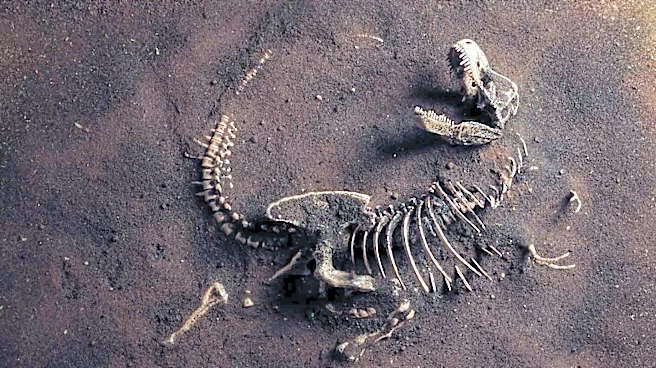
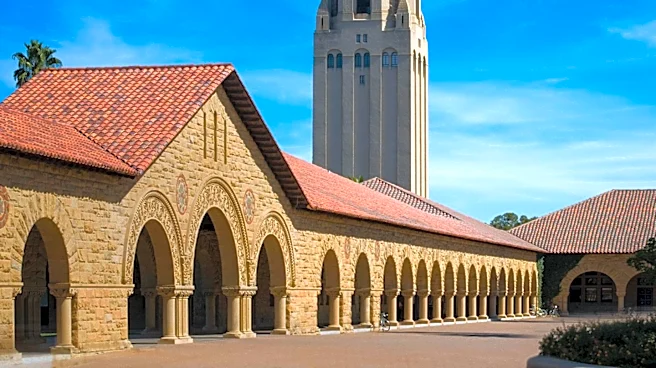
A rare and nearly intact Pacific mastodon molar, estimated to be at least 10,000 years old, has been found in a San Mateo County creek and is now part of Stanford University’s Geoscience Specimen Collection. The fossil, measuring nearly a foot long and a foot tall,
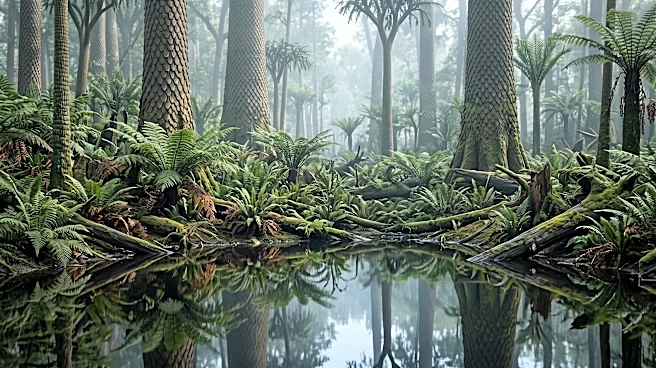
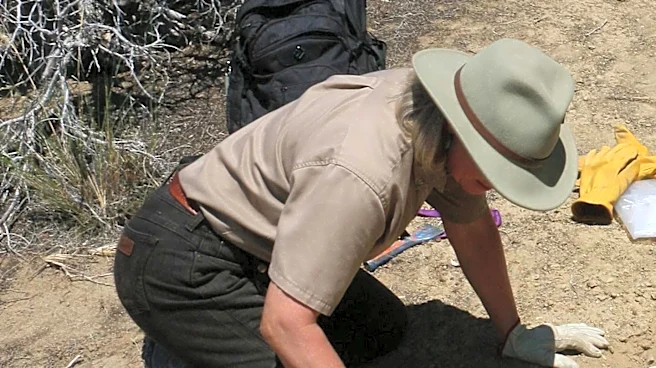
was discovered by Brigid Lynch, a geomorphologist with Balance Hydrologics, during a survey for habitat restoration. Wayne Thompson, a paleontologist and CEO of Pacific Paleontology, confirmed it as an upper left third molar, noting its immaculate condition and completeness, which is unusual as most mastodon fossil finds are fragmented. The molar provides a significant insight into the Pleistocene era and the ancient Bay Area landscape, where large mammals like mastodons, mammoths, giant ground sloths, and ancient camels once roamed. Researchers at Stanford plan to analyze the tooth to gather more information about the animal's diet, environment, and age. Additionally, a 3D scan of the molar has been created to produce replicas for educational outreach, allowing public interaction without risking damage to the original fossil.
Why It's Important?
This discovery is important for several reasons, primarily for its contribution to paleontological research and understanding of prehistoric ecosystems in the U.S. West Coast. The exceptional condition and completeness of the mastodon molar offer a unique opportunity for scientists to study the diet, age, and environmental conditions of Pacific mastodons, which were relatives of modern elephants. This can provide crucial data on how ancient ecosystems evolved and why certain species became extinct, offering valuable lessons for current conservation efforts. The fossil's presence in the Bay Area near the end of the Ice Age, when lower sea levels exposed more land, helps reconstruct the region's ancient geography and biodiversity. Furthermore, the use of 3D scanning and printing for educational replicas democratizes access to scientific discoveries, allowing broader public engagement and fostering interest in natural history and science among students and the general public. The discovery also highlights the ongoing importance of environmental surveys, as this significant find occurred during a habitat restoration project for threatened California red-legged frogs, underscoring the interconnectedness of ecological preservation and scientific discovery.
What's Next?
Researchers at Stanford University will proceed with detailed analysis of the mastodon molar to determine the animal's precise age, diet, and the environmental conditions it lived in. This will involve further testing to establish a more accurate timeframe for the fossil, which is currently estimated to be at least 10,000 years old. The 3D scan of the tooth will be utilized to create replicas for educational purposes, allowing for hands-on learning experiences without direct handling of the fragile original fossil. Officials are maintaining the exact discovery location private to protect any potential remaining fossils and to allow natural erosion to expose them rather than through excavation. This approach aims to preserve the site's integrity and prevent unauthorized disturbances. The discovery also serves as a reminder for ongoing conservation efforts, particularly in the context of protecting endangered species like the California red-legged frog, drawing parallels between ancient extinctions and current biodiversity threats.
Beyond the Headlines
The discovery of the mastodon molar extends beyond its scientific value, touching upon broader themes of environmental conservation and the ethical considerations of archaeological finds. The fact that the fossil was found during a habitat restoration project for a threatened species, the California red-legged frog, underscores a profound connection between past and present ecological concerns. It serves as a stark reminder that even massive, dominant species like mastodons can go extinct, highlighting the fragility of ecosystems and the urgency of protecting current endangered species. The decision to keep the exact discovery location private reflects an ethical approach to preserving natural heritage, prioritizing natural processes over intrusive excavation. This also raises questions about public access to significant historical sites versus their protection. The creation of 3D replicas for educational purposes exemplifies a modern approach to scientific outreach, balancing the need for preservation with the desire for public engagement and learning, ensuring that such rare finds can inspire future generations without being compromised.