



What's Happening?
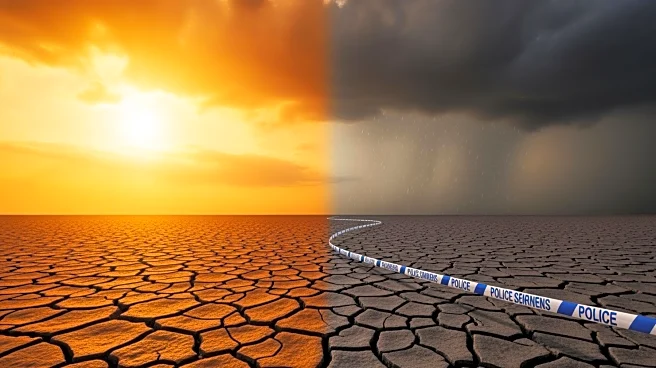
Recent climate models have highlighted the severe risks posed by extreme heat and rainfall, which could make several regions across the globe uninhabitable by the end of the century. According to a peer-reviewed analysis published in Nature Communications,
many tropical regions are expected to regularly exceed a Heat Index of 103°F by 2100, a level deemed 'dangerous' by the U.S. National Weather Service. This could lead to increased heat exhaustion, reduced labor capacity, and higher mortality rates. Additionally, a study in Nature Geoscience predicts a 41% increase in daily extreme rainfall over land by 2100 under high-emission scenarios, particularly affecting the southern hemisphere. These changes are expected to intensify flooding risks, especially in rapidly growing megacities with underdeveloped infrastructure.
Why It's Important?
The implications of these findings are significant, as they suggest that millions of people could be displaced due to uninhabitable conditions. The projected increase in extreme weather events poses a direct threat to urban centers, particularly in Asia and Africa, where infrastructure may not be equipped to handle such changes. This could lead to widespread displacement, increased pressure on urban resources, and heightened socio-economic challenges. The studies underscore the urgent need for global climate action and adaptation strategies to mitigate these risks and protect vulnerable populations.
What's Next?
As the threat of extreme weather conditions looms, cities and nations must prioritize climate adaptation strategies. This includes investing in infrastructure improvements, such as enhanced drainage systems and cooling centers, to better withstand extreme heat and rainfall. Policymakers will need to address financial constraints that hinder adaptation efforts, particularly in low-income regions. International cooperation and funding may be necessary to support these initiatives and ensure that vulnerable populations are protected from the impending climate crisis.
Beyond the Headlines
The potential for widespread uninhabitability raises ethical and legal questions about climate migration and the responsibility of nations to accommodate displaced populations. As cities become increasingly unlivable, migration patterns may shift, leading to new challenges in urban planning and resource allocation. The situation also highlights the need for equitable climate policies that consider the disproportionate impact on low-income and marginalized communities.