






What's Happening?
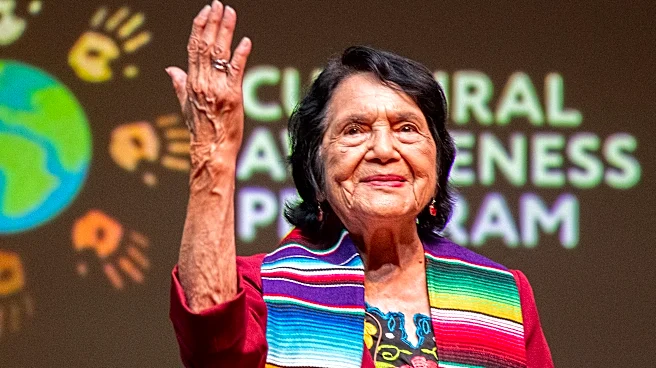
Dolores Huerta, a pivotal figure in the labor and civil rights movements, has passed away at the age of 96. Born Dolores Clara Fernández in Dawson, New Mexico, on April 10, 1930, Huerta co-founded the United Farm Workers (UFW) with César Chávez in 1962.
Her life was dedicated to advocating for social justice, organizing farmworkers, registering voters, and negotiating contracts to improve working conditions. Huerta's early experiences, including witnessing racism and economic hardship, shaped her commitment to activism. After teaching farmworkers' children and observing their struggles, she shifted her focus to organizing, believing that systemic change was necessary. She was instrumental in the Delano grape strike and subsequent boycotts, which led to significant gains for farmworkers, including higher wages and health benefits. Huerta's work also contributed to the passage of California's Agricultural Labor Relations Act of 1975, a landmark law protecting farmworkers' rights to organize and bargain collectively. Her enduring legacy is encapsulated in the rallying cry, '¡Sí, se puede!' (Yes, we can!).
Why It's Important?
Dolores Huerta's passing marks the end of an era for a foundational leader whose work profoundly impacted labor rights and civil rights in the United States. Her efforts directly led to improved living and working conditions for countless farmworkers, a demographic often marginalized and exploited. By co-founding the UFW, she helped establish a powerful voice for agricultural laborers, demonstrating the effectiveness of collective action and advocacy. Her legacy extends beyond specific policy changes; Huerta inspired generations of activists, particularly women, to take on leadership roles without seeking permission. Her emphasis on voter registration and civic participation underscored the critical link between organizing and political power, a lesson that continues to resonate in contemporary social justice movements. The protections and benefits secured through her work set precedents for labor standards and continue to influence discussions around fair labor practices and economic equity in various U.S. industries.
What's Next?
The passing of Dolores Huerta will likely prompt renewed reflection on the ongoing struggles for labor rights and social justice in the U.S. Her legacy will continue to inspire current and future generations of organizers and activists, particularly within Latino communities and among women leaders. Expect tributes and commemorations from political leaders, labor unions, and civil rights organizations, highlighting her contributions and calling for continued action on issues she championed. Her work in voter registration and civic engagement will likely be emphasized as a model for increasing participation in democratic processes. Advocacy groups may leverage her memory to push for stronger protections for agricultural workers and other vulnerable populations, potentially influencing legislative efforts at both state and federal levels regarding minimum wage, working conditions, and unionization rights. Her rallying cry, '¡Sí, se puede!', will undoubtedly remain a powerful call to action for those continuing the fight for equity and justice.
Beyond the Headlines
Beyond the immediate impact of her passing, Dolores Huerta's life illuminates deeper implications regarding the often-overlooked contributions of women in social movements. While figures like César Chávez received widespread recognition, Huerta's essential role in strategy, negotiation, and grassroots organizing was equally critical, yet sometimes less celebrated. Her story highlights the systemic tendency to under-recognize women's leadership in historical narratives, prompting a re-evaluation of how movements are documented and remembered. Furthermore, Huerta's unwavering commitment to non-violent direct action and her ability to bridge diverse communities underscore the enduring power of coalition-building in achieving social change. Her advocacy for farmworkers also brings to light the ethical dimensions of food production and labor exploitation, urging consumers and policymakers to consider the human cost behind the nation's food supply. Her legacy serves as a powerful reminder that fundamental rights and dignity must extend to all workers, regardless of their industry or background.