







What's Happening?
The Russian Ministry of Defense is struggling to meet its recruitment goals as the casualty rate in Ukraine continues to rise. According to the Ukrainian Foreign Intelligence Service, Russia has recruited approximately 195,000 contract soldiers by early
July 2026, falling short of its annual target of 409,000. The daily recruitment rate has decreased from 1,200 recruits per day in 2024 to 1,090 in mid-2026. This shortfall is attributed to the high casualty rates experienced by Russian forces, particularly in the Donetsk Oblast, where over 400 casualties occur per square kilometer seized. The Russian Ministry of Defense has relaxed medical and administrative standards to boost recruitment, targeting students, foreigners, and residents in Russian-occupied Ukraine. Despite these efforts, the recruitment rate remains insufficient to replace the losses on the battlefield.
Why It's Important?
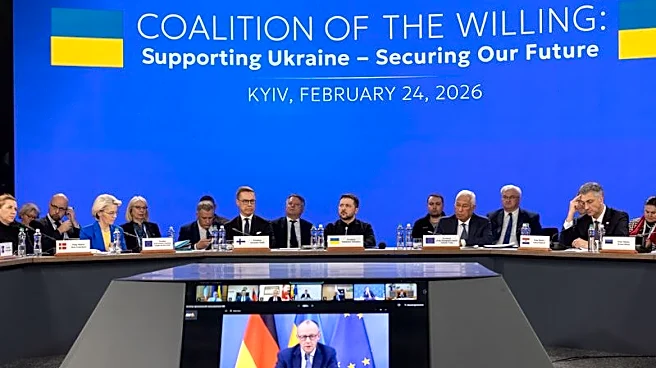
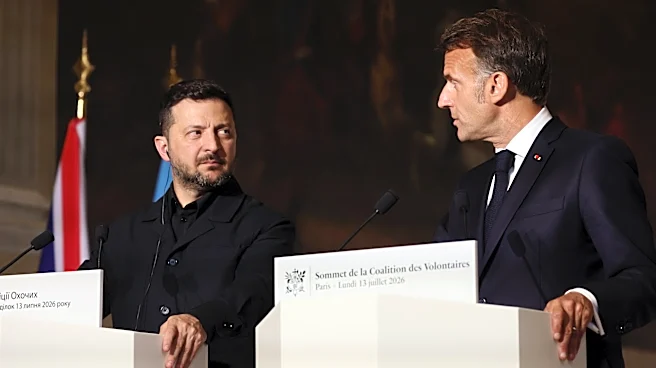
The inability of the Russian Ministry of Defense to meet its recruitment goals has significant implications for the ongoing conflict in Ukraine. The high casualty rates and recruitment challenges suggest that Russia may struggle to sustain its military operations without resorting to compulsory mobilization. This situation could weaken Russia's position in the conflict, potentially leading to a shift in the balance of power. Additionally, the Coalition of the Willing's support for Ukraine, including calls for security guarantees and peace negotiations, highlights the international community's commitment to Ukraine's sovereignty and security. The ongoing conflict and recruitment challenges may also impact Russia's domestic stability and its ability to project power internationally.
What's Next?
The Russian Ministry of Defense may need to consider alternative strategies to address its recruitment challenges, such as implementing compulsory mobilization or seeking diplomatic solutions to the conflict. The Coalition of the Willing's continued support for Ukraine, including efforts to enhance its air defense capabilities, suggests that international pressure on Russia will persist. The outcome of peace negotiations and the potential for a ceasefire will depend on Russia's willingness to engage in meaningful dialogue and compromise. The international community will likely continue to monitor the situation closely, with potential implications for global security and geopolitical dynamics.