
What's Happening?
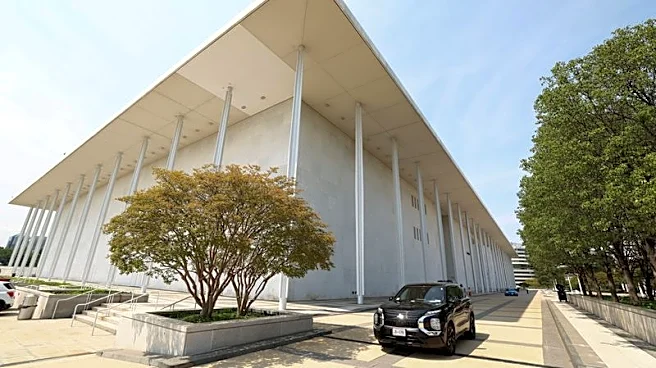
The Kennedy Center has informed a federal court that it will not attempt to restore President Trump's name to the building's facade before September 8. This decision comes amidst ongoing legal challenges regarding the display of President Trump's name on the performing
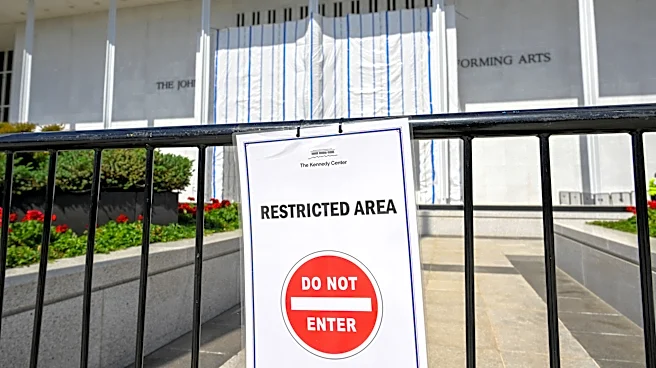
arts venue. Opponents of the move, including Representative Joyce Beatty, an Ohio Democrat and ex officio board member, argue that certain Trump-aligned board members are intent on defying a previous court order that mandated the removal of President Trump's name. The Kennedy Center stated that the delay is to allow time for legal arguments. A recent board meeting, initially focused on renovation options, instead resulted in a resolution to name the plaza in front of the building after President Trump and to add his name to the facade, specifically reading 'The John F. Kennedy Center for the Performing Arts Restored and Renovated By President Donald J. Trump.' An additional reference would be added if the Trump Kennedy Center Fund reached $100 million. The board also voted for a two-year closure for renovations, with programming to be held off-site.
Why It's Important?
This ongoing dispute highlights the broader political and cultural tensions surrounding the recognition of President Trump's legacy in national institutions. The legal battle over the Kennedy Center's facade reflects a struggle between those who wish to honor President Trump's contributions and those who oppose such public acknowledgments. The decision to delay the reinstatement of the name, even temporarily, indicates the significant legal and public pressure on the Kennedy Center's board. The proposed renovations and the potential two-year closure also have substantial implications for the performing arts community in Washington D.C., affecting artists, staff, and audiences. The financial aspect, particularly the condition of the Trump Kennedy Center Fund reaching $100 million for additional recognition, underscores the intersection of political influence and philanthropic endeavors in cultural institutions. This situation could set a precedent for how future administrations and their supporters seek to leave their mark on national landmarks.
What's Next?
The Kennedy Center will await further legal arguments before potentially moving forward with plans to reinstate President Trump's name on its facade. The September 8 date marks the earliest possible consideration for such a move. Lawyers for Representative Beatty are pushing for an earlier ruling, expressing concerns that the board may attempt to implement the resolution shortly after this date. The integrity of the board's recent vote is also under scrutiny, with critics drawing parallels to a previous vote that U.S. District Judge Christopher Cooper deemed 'ill-informed and seemingly preordained.' The planned two-year closure for renovations will proceed, impacting the scheduling and location of signature programming like the Kennedy Center Honors and the Mark Twain Prize for American Humor. The National Symphony Orchestra has already announced it will split its upcoming season across six venues. The legal proceedings will likely determine the ultimate fate of President Trump's name on the building and could influence future governance decisions at the Kennedy Center.
Beyond the Headlines
The controversy surrounding President Trump's name at the Kennedy Center extends beyond a simple naming dispute; it delves into questions of historical legacy, political influence on cultural institutions, and the interpretation of public space. The legal challenges underscore the importance of established protocols and judicial oversight in decisions affecting national landmarks. The use of a tarp to cover the area where President Trump's name was previously displayed, and the Kennedy Center's lack of commitment to its removal, symbolizes the unresolved nature of this conflict. This situation also raises ethical considerations regarding the balance between honoring donors or political figures and maintaining the non-partisan integrity of cultural institutions. The debate reflects a broader societal conversation about how a nation chooses to commemorate its leaders and the potential for such commemorations to become points of contention rather than unity. The outcome could influence future policies regarding naming rights and public recognition within federally supported cultural organizations.