


What's Happening?
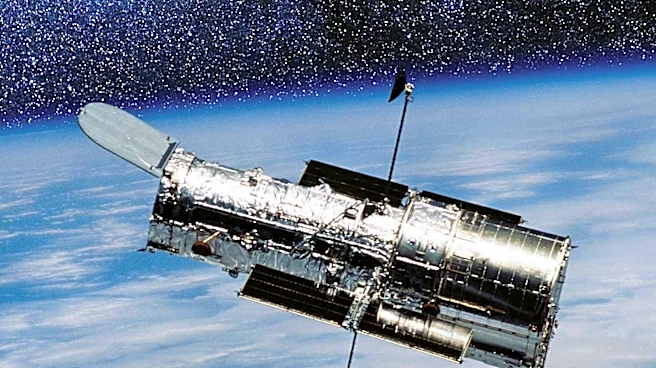
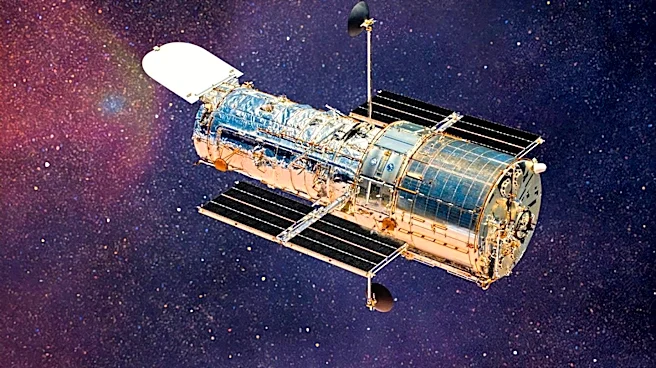
Scientists, utilizing data from the Hubble and Gaia orbiting telescopes, have uncovered evidence that the Milky Way galaxy underwent its earliest known galactic merger approximately 11.8 billion years ago. This event occurred when the universe was less
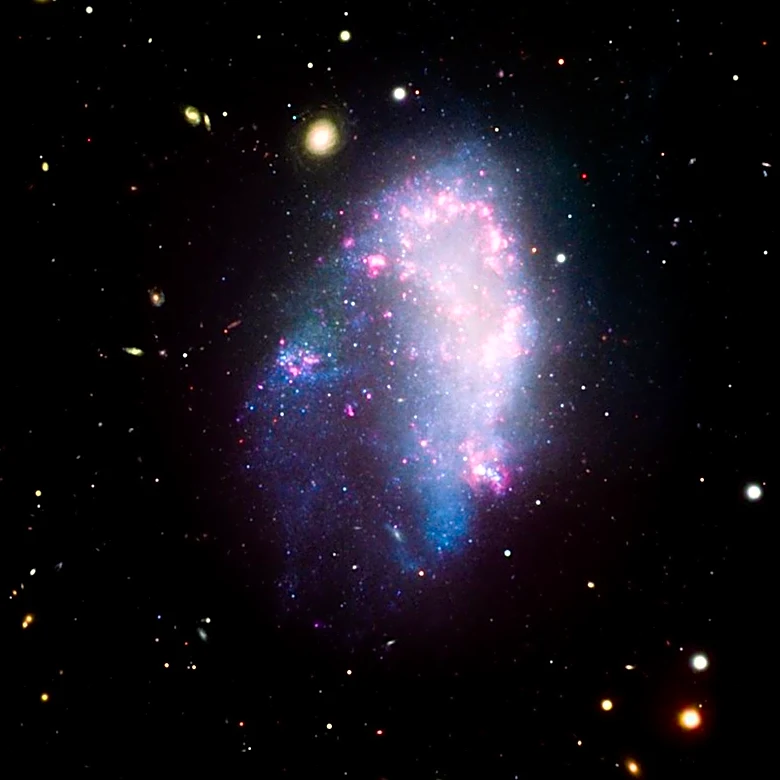
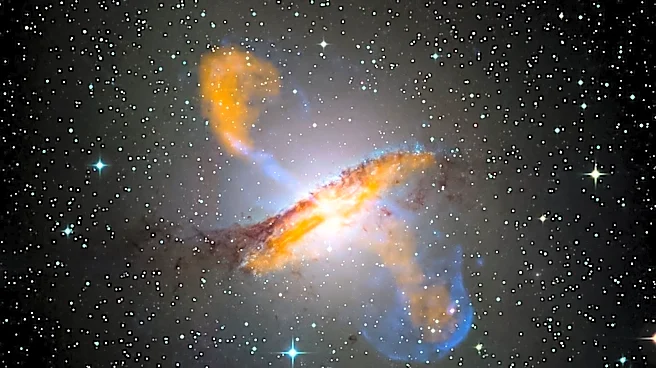
than 15% of its current age. The research, published in the journal Nature Astronomy, indicates that the Milky Way absorbed a smaller dwarf galaxy, which has been named Low-energy-Kraken-Heracles (LKH). At the time of the merger, the LKH dwarf galaxy contained stars with a mass equivalent to 500 million times that of the sun, making it about a quarter the size of the Milky Way. Researchers studied stellar clusters within the Milky Way's innermost 20,000 light-years, analyzing their age, chemical composition, and trajectory to reconstruct this ancient cosmic event. This discovery sheds light on the Milky Way's growth, demonstrating that it expanded not only through its own star formation but also by integrating smaller galaxies caught in its gravitational pull.
Why It's Important?
This discovery is crucial for understanding the evolutionary history of the Milky Way, including the formation of our own solar system and Earth. It provides concrete evidence supporting the theory that galactic mergers are a significant mechanism for galaxy growth, rather than solely internal star formation. The LKH merger, occurring just two billion years after the Big Bang, suggests that such large-scale cosmic events were fundamental in shaping galaxies in the early universe. The infusion of stars, interstellar gas, and dark matter from the dwarf galaxy into the nascent Milky Way would have profoundly influenced its subsequent development and star-forming processes. This research helps answer fundamental questions about the origins of our galaxy and, by extension, our place within the cosmos, offering a deeper perspective on the dynamic and violent processes that built the universe we observe today.
What's Next?
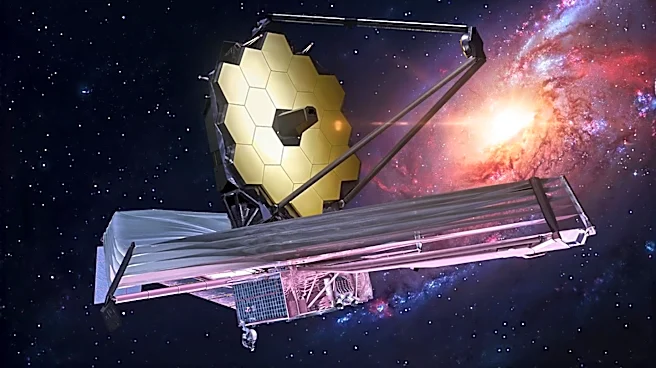
Future research will likely focus on further characterizing the remnants of the LKH dwarf galaxy within the Milky Way. Scientists anticipate that many stars originating from LKH are still embedded in the inner regions of our galaxy, some within stellar clusters. However, the presence of interstellar dust in these regions makes identifying individual stars challenging. Advanced observational techniques and data analysis, potentially involving next-generation telescopes, will be crucial for overcoming these hurdles. The ongoing study of galactic mergers, including the two other known massive mergers involving the Milky Way (Gaia-Sausage-Enceladus and the Sagittarius dwarf galaxy), will continue to refine our understanding of galaxy evolution. This research will contribute to a more complete picture of how galaxies assemble over cosmic time and the specific events that led to the Milky Way's current structure.
Beyond the Headlines
The identification of the LKH merger highlights the 'peaceful' nature of stellar interactions during such events, where direct star-to-star collisions are rare. However, the collision of gas from the merging galaxies was likely 'explosive,' triggering significant star formation. This distinction underscores the complex interplay of gravitational forces, gas dynamics, and star formation in galactic evolution. The study also emphasizes the role of dark matter, which was likely transferred during the merger, influencing the Milky Way's gravitational potential and structure. This research contributes to the broader field of cosmological studies, providing empirical data that can be used to test and refine models of galaxy formation and evolution. It also serves as a reminder of the vast, dynamic, and often violent history of the universe, where even our seemingly stable galaxy has undergone dramatic transformations over billions of years.