







What's Happening?
President Trump has called for a significant expansion of the Abraham Accords, which are agreements that establish diplomatic relations between Israel and several majority-Muslim countries. This call comes as he seeks to address the ongoing U.S.-Israeli
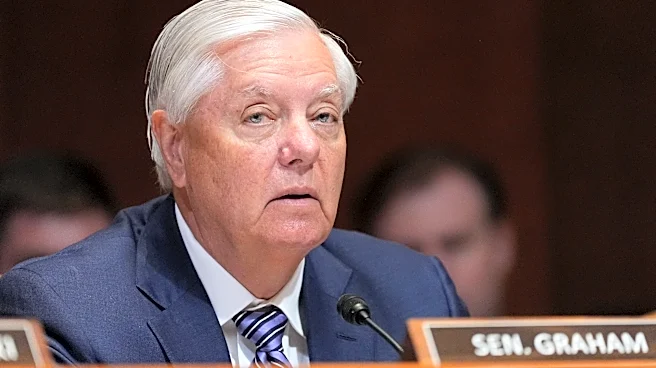
conflict with Iran. Trump suggested that Iran should join the coalition, despite the longstanding hostility between Iran and Israel. His comments were made on social media following criticism from Republican senators regarding a proposed ceasefire with Iran. The senators expressed concerns that the ceasefire, which lacks major concessions on Iran's nuclear program, would be a strategic error. Senate Armed Services Committee Chair Roger Wicker criticized the ceasefire as a potential disaster, emphasizing the need for more stringent measures against Iran.
Why It's Important?
The expansion of the Abraham Accords could have significant implications for U.S. foreign policy and Middle Eastern geopolitics. By advocating for Iran's inclusion, President Trump is challenging traditional diplomatic stances and potentially reshaping alliances in the region. This move could alter the dynamics of U.S.-Iran relations and impact the broader Middle Eastern peace process. The criticism from Republican senators highlights internal party divisions on foreign policy strategies, particularly concerning Iran's nuclear ambitions. The outcome of these diplomatic efforts could influence U.S. national security, energy markets, and international relations, affecting stakeholders ranging from government officials to global businesses.
What's Next?
The next steps involve monitoring the response from Middle Eastern countries and the international community to President Trump's proposal. The potential expansion of the Abraham Accords will require diplomatic negotiations and consensus among involved nations. Additionally, the U.S. administration may face pressure to clarify its stance on Iran's nuclear program and address concerns raised by Republican senators. The evolving situation could lead to further diplomatic engagements or adjustments in U.S. foreign policy, depending on the reactions from key stakeholders and the geopolitical landscape.