




What's Happening?
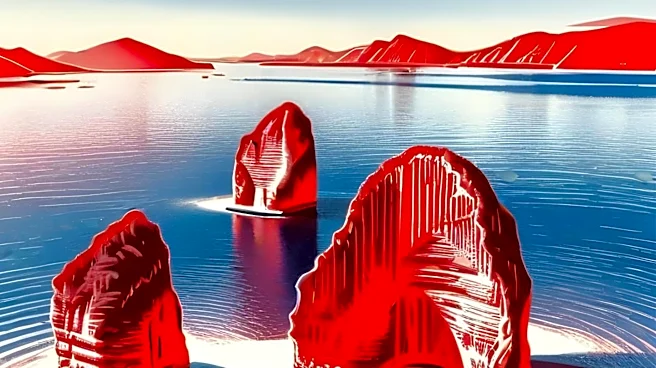
Researchers have uncovered new evidence suggesting that the red brine of Antarctica's Blood Falls originates from ancient seawater trapped beneath the Taylor Glacier. The study, published in Nature Geoscience, reveals that the brine's distinct red hue
is due to its high iron content. Genetic analysis of microorganisms in the brine indicates a marine origin, supporting previous hypotheses about its seawater roots. The findings suggest that the brine was trapped over a million years ago during a period of higher sea levels. The study provides new insights into the unique ecosystem of Blood Falls and its historical development.
Why It's Important?
The discovery of Blood Falls' ancient seawater origin offers significant insights into the geological and climatic history of Antarctica. Understanding the composition and origin of the brine can help scientists better comprehend the region's past environmental conditions and the impact of climate change over millennia. The findings also contribute to the broader study of subglacial ecosystems, which are crucial for understanding microbial life in extreme environments. This research could have implications for astrobiology, as it provides a model for studying potential life in similar conditions on other planets.
What's Next?
Further research is needed to pinpoint the exact timeline of when the Taylor Glacier advanced to cover the brine. Scientists plan to conduct more comprehensive genetic profiling and mapping of microorganisms to deepen their understanding of the ecosystem. These efforts will help clarify the historical development of Blood Falls and its environmental significance. The study may also inspire similar investigations into other subglacial environments, potentially leading to new discoveries about Earth's climatic history and the resilience of life in extreme conditions.