




What's Happening?
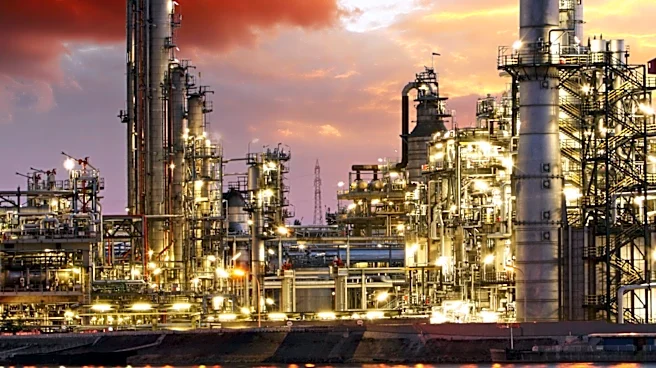
U.S. Representative Veronica Escobar has voiced concerns regarding the transparency and safety practices of the Marathon refinery in El Paso, Texas. Her concerns follow recent incidents at the refinery, including a pollutant spill and an injury to a contractor.
An environmental report indicated that over 15 tons of pollutants, such as propylene, sulfur dioxide, and carbon monoxide, were released in early August after an alteration in the fluid catalytic cracker. Residents reported sulfur odors and symptoms like nausea, headaches, and sore throats. In response to these issues, Representative Escobar requested an investigation by the Environmental Protection Agency (EPA), but her request was declined. The EPA cited that oversight of such matters falls under the jurisdiction of the Texas Commission on Environmental Quality (TCEQ). Meanwhile, Marathon Petroleum has tested a new emergency alert system for residents living within 800 meters of the refinery, in collaboration with the city, and has scheduled a community meeting for October 6 at Riverside High School to address community concerns.
Why It's Important?
This situation highlights significant environmental and public health concerns for residents living near industrial facilities in the U.S. The refusal of the EPA to investigate, deferring to the TCEQ, raises questions about the effectiveness of environmental oversight and regulatory enforcement at both federal and state levels. It underscores potential gaps in accountability when local communities experience adverse effects from industrial operations. For the affected residents, the reported symptoms and the lack of immediate federal intervention can erode trust in regulatory bodies and corporate responsibility. The incident also brings to light the economic implications of industrial accidents, including potential health costs for residents and operational disruptions for the company. The community's frustration, as expressed by municipal representative Josh Acevedo, indicates a broader issue of perceived corporate secrecy and a lack of transparent communication, which can lead to prolonged public distrust and calls for stricter regulations.
What's Next?
Marathon Petroleum is scheduled to hold a community meeting on October 6 at Riverside High School to address the concerns of local residents. This meeting will be a critical opportunity for the company to engage directly with the community, provide explanations, and outline steps to prevent future incidents. The newly tested emergency alert system will be activated to notify residents within 800 meters of the refinery in case of future incidents, aiming to improve communication and safety protocols. The Texas Commission on Environmental Quality (TCEQ) is expected to continue its oversight of the Marathon refinery, and its actions will be closely watched by community members and elected officials, including Representative Escobar. Depending on the outcomes of the community meeting and any further incidents, there could be increased pressure for legislative action to strengthen environmental regulations or re-evaluate the division of oversight responsibilities between federal and state agencies.
Beyond the Headlines
The Marathon refinery situation in El Paso delves into the complex interplay between industrial operations, environmental regulation, and community well-being. It exposes the challenges of environmental justice, where lower-income communities often bear a disproportionate burden of industrial pollution. The EPA's decision to defer to the TCEQ raises questions about the efficacy of federal environmental protection in states with potentially less stringent enforcement or resources. This incident could catalyze broader discussions about the need for more robust federal oversight in cases where state agencies are perceived as inadequate or industry-friendly. Furthermore, the community's demand for transparency and accountability from Marathon reflects a growing national trend of public scrutiny over corporate environmental practices. The long-term implications could include a re-evaluation of industrial zoning laws, enhanced community engagement requirements for hazardous facilities, and potentially, a push for federal legislation that ensures a more unified and stringent approach to environmental protection across all states.