









What's Happening?
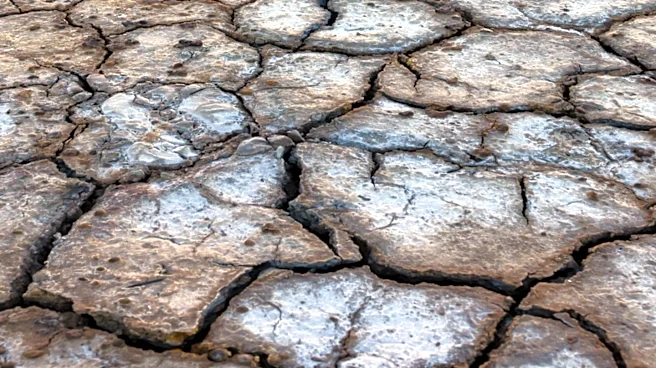
The Aral Sea, once the world's fourth-largest inland lake, has been largely drained due to irrigation for cotton crops, leaving a vast salty plain. Recent research indicates that this drying has released approximately 748 million metric tons of carbon
dioxide into the atmosphere since 1960, contributing significantly to climate change. The study highlights the Aral Sea as a 'ticking carbon bomb,' with potential further emissions if the remaining carbon is not managed. The findings underscore the environmental and climatic consequences of large-scale water diversion projects.
Why It's Important?
The drying of the Aral Sea serves as a stark example of how human activities can drastically alter natural environments, leading to unforeseen climate impacts. The release of carbon dioxide from the dried lakebed contributes to global warming, highlighting the need for sustainable water management practices. This situation also raises awareness about similar threats posed by other drying lakes worldwide. Addressing these issues could involve international cooperation and innovative solutions, such as carbon credit systems, to mitigate further environmental damage.