





What's Happening?
A new study published in the scientific journal Current Biology suggests that individuals possessing a specific Neanderthal gene variant may exhibit greater muscle mass. Researchers have identified that this variant, found in the GHR (growth hormone receptor)
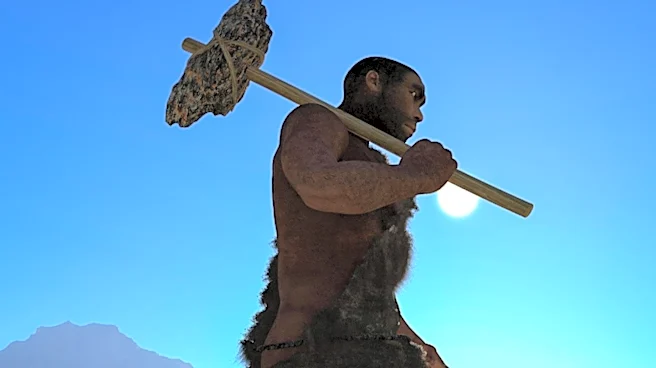
gene, influences how the body responds to growth hormone. Neanderthals, known for their muscular build, emerged approximately 400,000 years ago. Around 50,000 years ago, when Neanderthals and Homo sapiens interbred, a genetic exchange occurred. Today, 1-2% of the human population, particularly those of South and East Asian descent, carry Neanderthal genes. The study's findings indicate that this inherited variant of the GHR gene is likely responsible for the increased muscle mass observed in these individuals, providing a potential explanation for a physical trait passed down from our ancient relatives.
Why It's Important?
This discovery holds significant implications for understanding human evolution, genetics, and potentially, future medical and athletic applications in the U.S. and globally. For the scientific community, it sheds light on the functional consequences of Neanderthal introgression into the modern human genome, moving beyond mere ancestry tracking to understanding phenotypic traits. In the realm of health and medicine, identifying specific genetic variants linked to muscle mass could open avenues for research into conditions like sarcopenia (age-related muscle loss) or muscular dystrophies. It might also inform personalized medicine approaches, where genetic predispositions could guide exercise regimens or nutritional advice. For the sports industry, understanding genetic factors influencing muscle development could lead to new insights in athlete training and talent identification, though ethical considerations would be paramount. This research also underscores the ongoing impact of ancient human history on contemporary human biology, influencing diverse populations, including those within the U.S.
What's Next?
Future research will likely focus on further elucidating the precise mechanisms by which this Neanderthal GHR gene variant enhances muscle mass. Scientists may conduct more extensive population studies to confirm the prevalence and impact of this variant across diverse ethnic groups, including those in the U.S. There could also be investigations into whether this genetic trait is associated with other physiological differences or health outcomes. The findings might prompt studies to explore potential therapeutic applications, such as gene-editing techniques or pharmaceutical interventions targeting the GHR pathway, to address muscle-related disorders. Additionally, the discovery could stimulate broader interest in paleogenomics and the study of ancient human DNA to uncover more functional genetic contributions from extinct hominins to modern humans. Ethical discussions surrounding genetic screening for athletic potential or health interventions based on ancient genes are also likely to emerge.
Beyond the Headlines
The revelation that Neanderthal genes contribute to modern human muscle mass delves into the profound and often subtle ways our evolutionary past continues to shape our present biology. This isn't merely a historical curiosity but a living legacy embedded in our DNA. The ethical dimensions of such discoveries are considerable, particularly concerning how genetic information might be used in areas like sports, where the line between natural advantage and genetic manipulation can become blurred. It also raises questions about the societal implications of identifying genetic predispositions to physical traits, potentially influencing perceptions of individual capabilities or even contributing to new forms of genetic discrimination. Culturally, it reinforces the idea of a shared human heritage, where the genetic tapestry of humanity is woven from diverse ancestral threads. This research challenges simplistic notions of human uniqueness, highlighting the complex and interconnected evolutionary journey that has led to the biological diversity observed today.