





What's Happening?
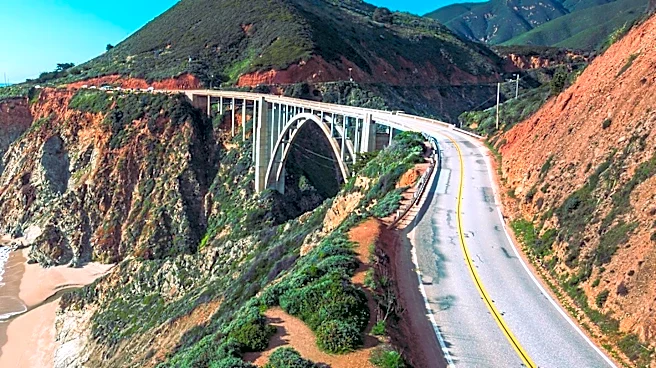
California's Pacific Coast Highway (PCH) is highlighted as a premier U.S. road trip destination, offering diverse landscapes from long beaches and cliffs to mountains and old-growth forests. The nearly 100-year-old route, also known as State Route 1,
caters to various interests including nature, food, history, and recreation. Travelers can explore literary-themed coastal trips, architectural tours, birding, surfing, hiking, shopping, or wine tasting. However, the region is also prone to natural disasters such as mudslides, earthquakes, and wildfires, which can impact travel plans and accessibility. For instance, recent wildfires caused road closures and evacuations, necessitating detours for travelers. The route spans over 300 miles between major cities like Los Angeles and San Francisco, offering a blend of planned stops and opportunities for spontaneous discoveries.
Why It's Important?
The Pacific Coast Highway's status as a major tourist attraction significantly impacts California's tourism industry, drawing both domestic and international visitors. Its diverse offerings support local economies along the route, from small businesses in towns like Cambria and San Simeon to larger hospitality sectors in Santa Barbara and Monterey. The inherent risks of natural disasters, however, pose a continuous challenge to infrastructure and public safety. These events can lead to substantial economic losses due to road closures, property damage, and decreased tourism, affecting local communities and state resources. Effective disaster preparedness and response mechanisms are crucial for maintaining the route's appeal and ensuring traveler safety, highlighting the delicate balance between promoting tourism and managing environmental vulnerabilities.
What's Next?
Travelers planning a PCH road trip should anticipate the need for flexible itineraries and continuous monitoring of local conditions, especially concerning natural disasters. State and local authorities will likely continue to implement and update safety protocols and infrastructure improvements to mitigate the impact of mudslides, earthquakes, and wildfires. This includes ongoing road maintenance, early warning systems, and public information campaigns. For tourists, this means checking for road closures and evacuation orders before and during their journey. Businesses along the route may need to adapt to potential disruptions, possibly by offering flexible booking options or alternative services. The long-term strategy will involve balancing conservation efforts with tourism development, ensuring the PCH remains a viable and safe travel destination.
Beyond the Headlines
The allure of the Pacific Coast Highway extends beyond its scenic beauty, embodying a cultural ideal of freedom and exploration deeply ingrained in the American psyche. The route's vulnerability to natural disasters serves as a stark reminder of human interaction with the environment and the increasing challenges posed by climate change. This dynamic interplay raises questions about sustainable tourism practices, the resilience of coastal communities, and the role of infrastructure in adapting to environmental shifts. The PCH's narrative is not just about a road trip; it's a microcosm of broader societal issues concerning environmental stewardship, economic sustainability, and the pursuit of leisure in an unpredictable world. The ongoing efforts to preserve and protect this iconic route reflect a collective commitment to maintaining both its natural splendor and its cultural significance.