
What's Happening?
The United States is experiencing a significant shortfall in the construction of high-voltage transmission lines, despite a rapidly increasing demand for electricity. A new analysis by energy policy experts
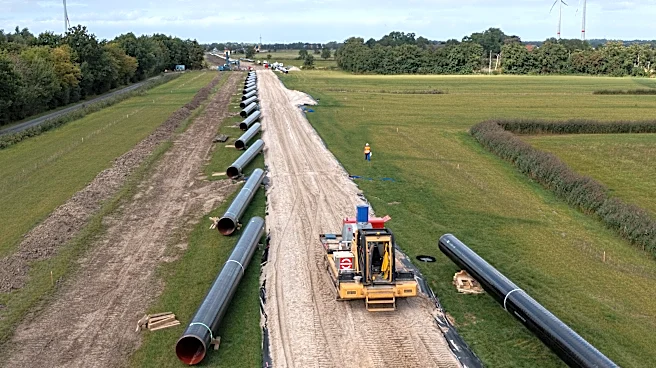
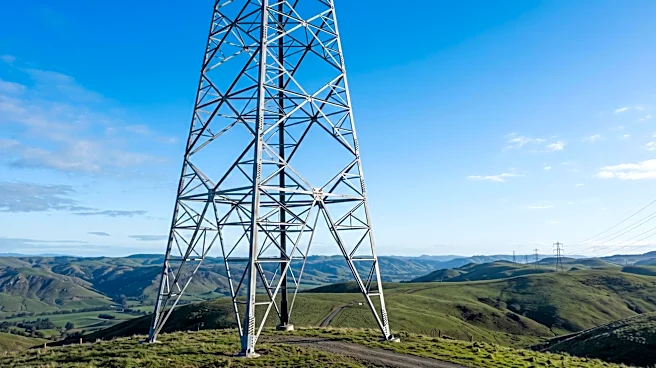
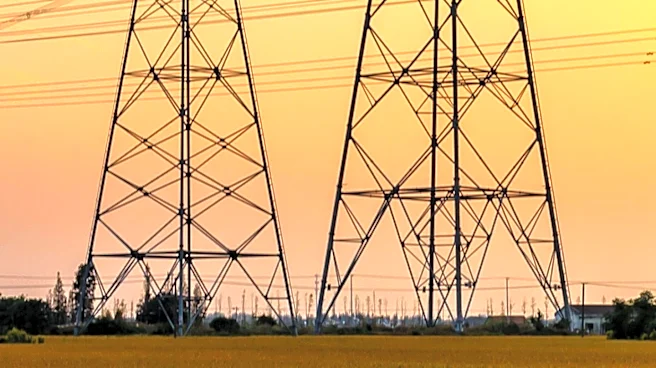
Madeline Yozwiak, M. Granger Morgan of Carnegie Mellon University, and David G. Victor of the University of California San Diego, highlights that only about 500 miles of new high-voltage lines (345 kilovolts or above) have been built annually over the past five years. This figure is merely one-tenth of the 5,000 miles per year that studies, including a Department of Energy report, suggest are necessary to meet future demands. The analysis attributes this lag not to technical limitations, but to jurisdictional complexities, where authority is fragmented among federal, state, and private entities, each with differing priorities. This division allows multiple stakeholders to impede progress on nationally beneficial projects. The rising demand for electricity is driven by factors such as electric vehicles, electrified heavy industry, the proliferation of data centers, and the increasing reliance on variable renewable energy sources like wind and solar, which require more extensive power transmission over longer distances.
Why It's Important?
The lagging development of the U.S. power grid poses substantial risks to national energy security, economic growth, and the transition to renewable energy. Without adequate high-voltage transmission infrastructure, the grid's reliability is compromised, increasing the likelihood of power outages and higher consumer costs. Industries reliant on stable and affordable electricity, such as manufacturing and data centers, could face operational challenges and reduced competitiveness. Furthermore, the inability to efficiently transmit power from renewable energy sources, often located in remote areas, to demand centers hinders the country's climate goals and investments in clean energy. The current jurisdictional fragmentation creates a bottleneck, where individual state or local interests can override broader national energy needs, leading to an inefficient and under-resourced national grid. This situation could deter private investment in critical energy infrastructure and slow down technological adoption necessary for a modern, resilient power system.
What's Next?
The analysis proposes several solutions to address the transmission line deficit. One immediate step involves the Department of Energy re-establishing national interest corridors under a 2005 law, which would simplify permitting for new power lines. These corridors were previously canceled by the Trump administration in August 2026. States could also contribute by repealing laws that grant existing utilities the first claim on new projects, fostering more competition and innovation. Additionally, sharing more benefits with host communities could incentivize rather than block construction. Technological upgrades, such as replacing existing wires or converting lines to direct current (DC), can triple capacity without requiring new routes, potentially reducing local opposition. The authors also suggest learning from international experiences, proposing a cross-national forum led by state utility regulators to study successful approaches abroad. A more ambitious proposal is the creation of a Presidential-Congressional Transmission Commission to draft new federal and state laws, assess regulatory body expansions, and identify incentives for developers and host communities.
Beyond the Headlines
The core issue extends beyond mere infrastructure development; it touches upon fundamental questions of federalism, economic incentives, and public-private cooperation in critical national projects. The current system, where local veto power can override national strategic interests, highlights a broader governance challenge in the U.S. This jurisdictional gridlock not only impedes energy infrastructure but could also serve as a precedent for other large-scale national projects requiring cross-state collaboration, such as transportation or water management. The reliance on private investors to ultimately decide what gets built, without a single national plan, underscores the tension between market-driven development and strategic national planning. Addressing this will require a re-evaluation of how national priorities are balanced with local autonomy, potentially leading to new legislative frameworks that streamline permitting processes while ensuring equitable distribution of benefits and costs. The long-term implications involve shaping the future energy landscape, influencing industrial location decisions, and determining the pace of the nation's energy transition.