







What's Happening?
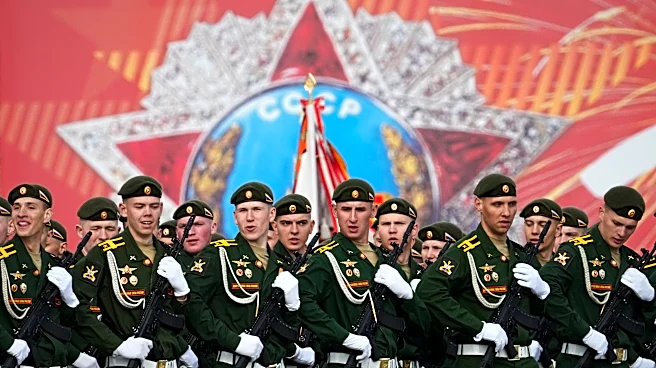
Russia's defense ministry has accused Ukraine of violating a ceasefire that was unilaterally declared by President Vladimir Putin. The ceasefire began on May 8, coinciding with Russia's Victory Day celebrations, which commemorate the Allied victory in World
War II. According to Russian state media, Ukrainian drones and artillery targeted Russian forces and civilian areas. Despite these accusations, Moscow has stated its intention to adhere to a three-day ceasefire arranged by the United States, starting on May 9. This development comes amidst ongoing tensions and conflict between Russia and Ukraine, with both sides experiencing significant military and civilian casualties.
Why It's Important?
The ceasefire and its alleged violations highlight the ongoing volatility in the Russia-Ukraine conflict, which has significant implications for international relations and regional stability. The involvement of the United States in mediating a ceasefire underscores the global interest in resolving the conflict and preventing further escalation. The accusations of ceasefire violations could complicate diplomatic efforts and impact future negotiations. Additionally, the conflict has broader implications for European security and energy markets, as disruptions can affect global supply chains and economic stability.
What's Next?
The next steps in the conflict will likely involve continued diplomatic efforts to maintain the ceasefire and address the accusations of violations. The international community, including the United States and European nations, may increase pressure on both Russia and Ukraine to adhere to the ceasefire and engage in peace talks. Monitoring the situation closely, stakeholders will be looking for signs of de-escalation or further conflict, which could influence future diplomatic and economic strategies.