





What's Happening?
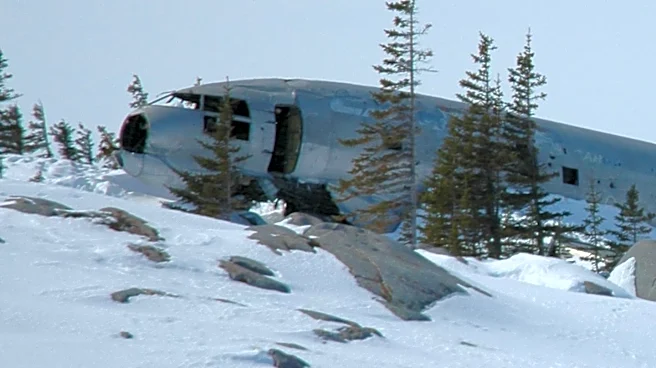
In August 2026, a team of nine soldiers from the 59th Signal Battalion, led by Capt. Steven Sparks, successfully retrieved a historic U.S. Army Signal Corps radio from the wreckage of a TB-29 bomber that crashed in Alaska in 1957. The aircraft, en route
to Elmendorf Air Force Base, crashed into what is now known as Bomber Glacier, killing six of its ten crew members. The BC-348-Q Wells-Gardner & Co. Signal Corps radio, which was used to send the final distress message, remained at the crash site for nearly 69 years. Capt. Sparks initiated the recovery operation after identifying the artifact in a hiker's video blog. The mission, dubbed 'Operation Frozen Recovery,' involved extensive coordination with Alaska State Parks, Ranger Offices, the State Historian Society, and the Matanuska Historic Society, all of whom approved the recovery. The team faced a challenging trek across rugged mountain terrain and glacial ice to reach and extract the radio.
Why It's Important?
The recovery of this historic Signal Corps radio is significant for several reasons. It represents the preservation of a tangible piece of U.S. military history, offering a direct link to a Cold War-era aviation incident and the technological capabilities of the time. The radio's role in sending a distress signal highlights its historical value as a testament to the crew's efforts in a dire situation. For military historians and enthusiasts, the artifact provides valuable insight into communication equipment used during that period. Furthermore, the successful operation by the 59th Signal Battalion demonstrates the dedication and capabilities of modern military personnel in executing complex recovery missions in extreme environments, underscoring their commitment to honoring military heritage. The artifact will likely become a valuable addition to military museums or historical collections, educating future generations about this specific event and broader military history.
What's Next?
Following its successful recovery, the historic BC-348-Q Signal Corps radio will likely undergo preservation and documentation processes. It is expected to be transferred to a suitable museum or historical archive, such as the U.S. Army Signal Corps Museum or a relevant Alaskan historical society, where it can be properly conserved and displayed. This will allow the public and researchers to access and learn from the artifact. The story of 'Operation Frozen Recovery' itself may be further documented and shared through military publications, historical accounts, or public exhibitions, highlighting the efforts of the soldiers involved. The recovery could also inspire future efforts to retrieve other historical artifacts from remote or challenging locations, contributing to the ongoing preservation of military and national heritage.
Beyond the Headlines
The retrieval of the Signal Corps radio from Bomber Glacier extends beyond a simple recovery mission; it touches upon themes of memory, legacy, and the enduring power of historical artifacts. The nearly seven decades the radio spent embedded in the ice underscore the harsh, unforgiving nature of the Alaskan wilderness and the passage of time. Its discovery through a hiker's video blog highlights the role of citizen engagement and modern technology in uncovering historical sites. The operation also serves as a poignant reminder of the sacrifices made by military personnel, even during routine training missions, and the importance of honoring those who served. Ethically, the careful coordination with state historical and park authorities before the recovery emphasizes responsible stewardship of historical sites and artifacts, balancing preservation with accessibility and respect for the environment where such events occurred.