






What's Happening?
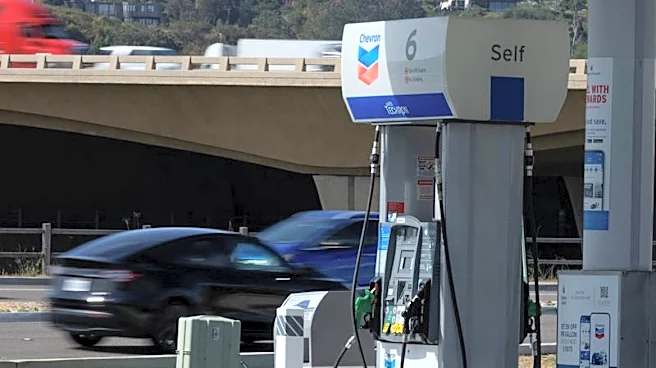
Governor Mike Braun of Indiana has announced an extension of the suspension of the state's sales tax on gasoline for an additional 30 days. In addition to this, he has also paused the state gas tax, which is 36 cents per gallon. This move is expected
to save Hoosier motorists approximately 59.3 cents per gallon over the next month. The combined tax suspensions are projected to cost the state $104 million and local units $52 million. Initially, Braun had suspended the 7% sales tax on gasoline, which alone cost $50 million in revenue. The current suspension was set to end on May 8, but with the extension, residents will continue to benefit from a 12.4% discount on the average price of gasoline in Indiana, which has risen from $4.14 to $4.76 per gallon since April.
Why It's Important?
The extension of the gas tax suspension is significant as it provides immediate financial relief to Indiana residents amid rising fuel prices. By reducing the cost of gasoline, the measure aims to alleviate the economic burden on consumers, particularly those who rely heavily on personal vehicles for commuting and work-related travel. The decision reflects a broader effort to address the impact of inflation and high energy costs on household budgets. However, the suspension also poses a financial challenge to the state, as it results in a substantial loss of revenue that could affect funding for public services and infrastructure projects. The move underscores the balancing act between providing short-term relief and maintaining fiscal stability.
What's Next?
As the tax suspension continues, the state government will need to assess the long-term implications of the revenue loss and explore alternative measures to support public finances. Stakeholders, including local governments and public service providers, may advocate for compensatory funding or policy adjustments to mitigate the impact on their operations. Additionally, the governor's office is expected to release details on an increase in the mileage reimbursement rate for state employees using personal vehicles for work, which could further influence state budget allocations. The situation will likely prompt discussions on sustainable energy policies and transportation infrastructure investments to reduce dependency on volatile fuel markets.