

What's Happening?
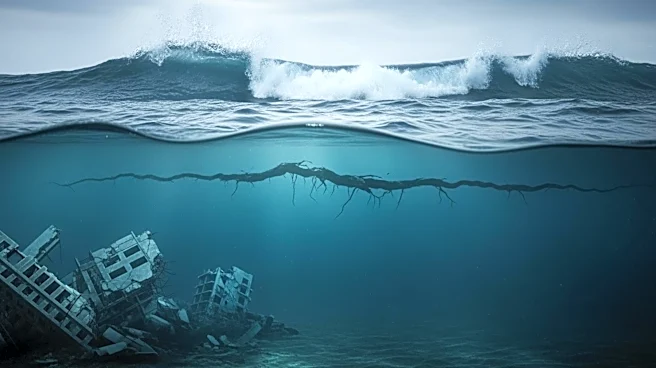
An undersea earthquake with a magnitude of 7.4 struck off the coast of northern Indonesia, causing significant damage and generating a small tsunami. The earthquake was centered in the Molucca Sea and affected areas including Bitung in North Sulawesi
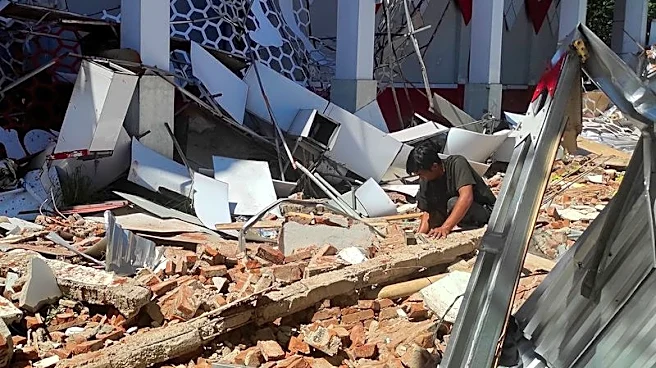
province and Ternate city in North Maluku province. The Disaster Management Agency reported strong shaking lasting 10 to 20 seconds, leading to the collapse of buildings and the death of a 70-year-old woman in Manado city. At least three people were injured in Ternate, and damage assessments are ongoing in Bitung. Tsunami waves up to 30 inches above normal tides were recorded, but the tsunami warning was lifted hours later.
Why It's Important?
Indonesia is located on major seismic faults, making it prone to frequent earthquakes and volcanic eruptions. This event highlights the ongoing vulnerability of the region to natural disasters, which can have devastating impacts on local communities. The earthquake's effects, including building collapses and a tsunami, underscore the need for robust disaster preparedness and response strategies. The incident also serves as a reminder of the potential for significant loss of life and property in such events, emphasizing the importance of early warning systems and infrastructure resilience.
What's Next?
Authorities are continuing to assess the damage and gather information on potential victims, particularly in remote villages. The focus will likely be on providing immediate relief and support to affected communities, as well as evaluating the structural integrity of buildings in the impacted areas. There may also be discussions on improving disaster preparedness and response mechanisms to better handle future seismic events. The international community may offer assistance, and there could be increased attention on the need for sustainable development practices in earthquake-prone regions.
Beyond the Headlines
The earthquake in Indonesia raises broader questions about the long-term impacts of climate change and environmental degradation on seismic activity. While the direct link between climate change and earthquakes is not well-established, the increased frequency of extreme weather events and rising sea levels could exacerbate the effects of natural disasters. This incident may prompt further research into the interconnectedness of environmental factors and seismic activity, as well as the development of more comprehensive risk management strategies.