





What's Happening?
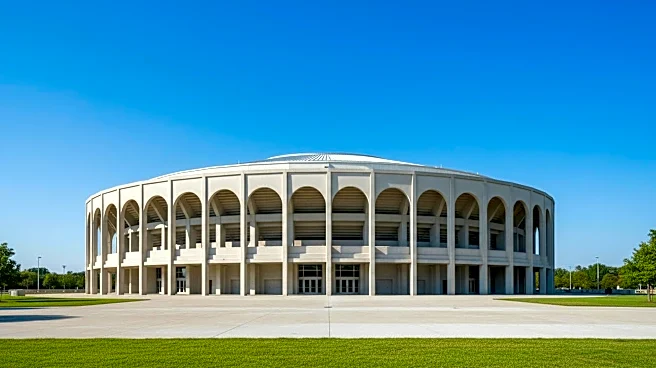
Memphis City Council members are in agreement regarding the need to revamp the Mid-South Coliseum, a legendary entertainment venue that has been closed for 20 years. Corey Strong, President of the Mid-South Coliseum Conservancy, informed city leaders
on Tuesday morning about the next steps for the venue's revitalization. Strong stated that private investors are prepared to assist in transforming the structure into a destination appealing to both the community and tourists. He clarified that the conservancy is not seeking large sums of money but has secured pledges from dozens of individuals, amounting to 30% to 40% of their initial goal. The conservancy estimates needing $200,000 to commence the development plan. The immediate next step involves aligning city administrators on the project's direction.
Why It's Important?
The potential revitalization of the Mid-South Coliseum holds significant importance for Memphis, Tennessee, impacting its cultural landscape, tourism, and local economy. A successful renovation could re-establish the venue as a major entertainment hub, attracting events and visitors, thereby boosting local businesses and creating job opportunities. The involvement of private investors signals a community-driven effort to preserve a historic landmark, potentially reducing the financial burden on public funds. This initiative could serve as a model for other cities looking to repurpose aging infrastructure through public-private partnerships. Furthermore, the project's success could enhance Memphis's reputation as a vibrant cultural destination, contributing to civic pride and community engagement. Conversely, failure to secure full administrative alignment or funding could leave a significant historical site in disuse, representing a missed opportunity for economic and cultural growth.
What's Next?
The immediate next step for the Mid-South Coliseum revitalization project is to achieve alignment among city administrators. Corey Strong, President of the Mid-South Coliseum Conservancy, emphasized the necessity of getting city officials on the same page to move forward. Once administrative consensus is reached, the conservancy will proceed with securing the remaining funds needed to reach their $200,000 target for the development plan. This will likely involve further engagement with private investors and potentially public fundraising efforts. Following the securing of initial funds, the development plan itself will be initiated, which could include architectural studies, feasibility assessments, and detailed planning for the venue's transformation. The project's progress will depend heavily on the speed and effectiveness of these administrative and financial steps.
Beyond the Headlines
The effort to revive the Mid-South Coliseum transcends a simple renovation project; it represents a broader trend in urban development focused on preserving historical assets while adapting them for contemporary use. This initiative highlights the complex interplay between historical preservation, economic development, and community identity. The conservancy's reliance on private investors underscores a growing model where civic groups and private capital collaborate to address public needs, particularly when public funds are constrained. The success of this project could set a precedent for how other cities approach the challenge of maintaining and repurposing iconic but disused public spaces. It also raises questions about the long-term sustainability of such ventures and the balance between commercial viability and public access to cultural heritage.