
What's Happening?
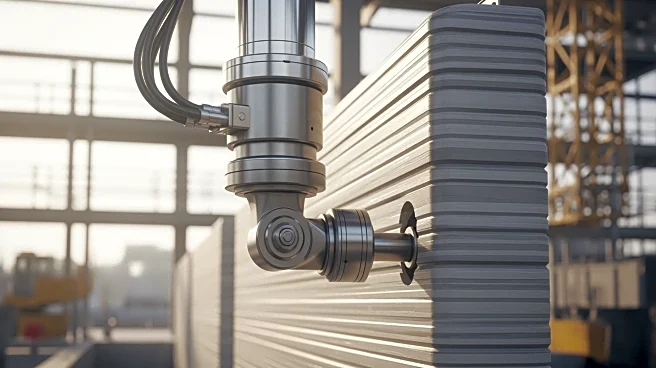
The Indian Army has adopted 3D concrete printing technology to enhance its defensive capabilities along the northern borders. Utilizing a homegrown, vehicle-mounted 3D concrete printer, the army can quickly
construct bunkers, sentry posts, and other defensive structures. This technology, equipped with a robotic arm, piston pump, and circular mixer, allows for rapid construction in rugged and mountainous terrains, significantly reducing the time and manpower required for building fortifications.
Why It's Important?
The implementation of 3D concrete printing in military operations represents a significant advancement in defense technology, offering strategic advantages in terms of speed and resource allocation. By reducing construction time and freeing up personnel for other tasks, the Indian Army can enhance its operational readiness and adaptability in conflict zones. This development also highlights the growing role of technology in modern warfare, where rapid infrastructure deployment can be a decisive factor in maintaining territorial integrity and responding to threats.
What's Next?
As the Indian Army continues to integrate 3D printing technology into its operations, other military forces around the world may follow suit, leading to a broader adoption of this technology in defense strategies. This could spur further innovations in military engineering and logistics, as well as collaborations between defense sectors and technology companies. Additionally, the success of this initiative may encourage the Indian government to invest more in technological advancements for national security purposes.