
What's Happening?
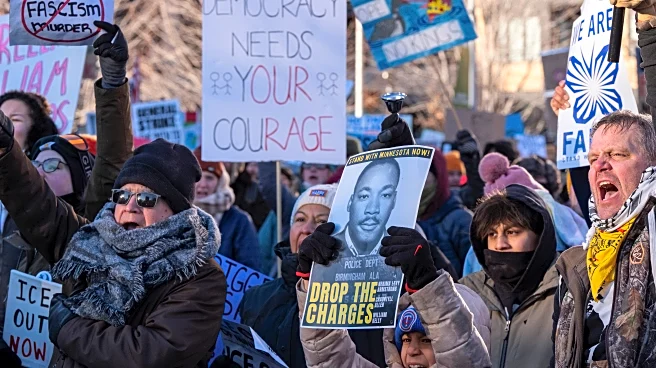
Thousands of demonstrators gathered in Salt Lake City's Washington Square Park as part of a 'shut it down' strike against Immigration and Customs Enforcement (ICE). This protest is part of a larger wave
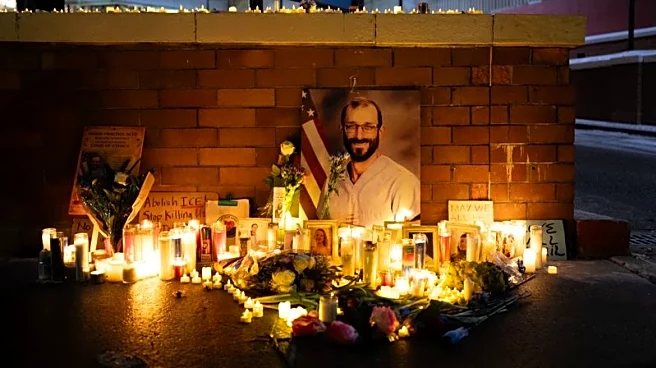
of demonstrations across the United States, sparked by the fatal shootings of Alex Pretti and Renee Good by ICE agents in Minnesota. The 'National Shutdown' strike calls for an economic blackout, urging no work, school, or shopping, to pressure federal authorities to remove ICE from communities nationwide. The protest in Salt Lake City was organized by local groups, including Mecha de U of U and the Party for Socialism and Liberation.
Why It's Important?
The protests signify a growing national movement against ICE and its enforcement tactics, reflecting widespread public dissatisfaction with current immigration policies. The demonstrations aim to draw attention to the human cost of aggressive immigration enforcement and advocate for systemic change. The involvement of diverse groups and communities highlights the broad-based support for reform and the potential for these protests to influence public policy and political discourse. The economic aspect of the strike underscores the power of collective action in advocating for change.
What's Next?
Organizers plan to continue protests and strikes until ICE is removed from American streets, with calls for the prosecution of ICE agents involved in the shootings. The movement is expected to expand as more communities join in solidarity, potentially leading to increased political pressure on federal authorities. The protests may also influence upcoming elections, as immigration policy becomes a key issue for voters. Additionally, the ongoing demonstrations could lead to legislative efforts to reform immigration enforcement practices.
Beyond the Headlines
The protests against ICE are part of a broader conversation about immigration reform and the balance between national security and human rights. The events have sparked discussions about the ethical implications of immigration enforcement and the need for comprehensive policy solutions that address the root causes of migration. The movement also raises questions about the role of civil disobedience in effecting social change and the responsibilities of citizens to advocate for justice and equality.