


What's Happening?
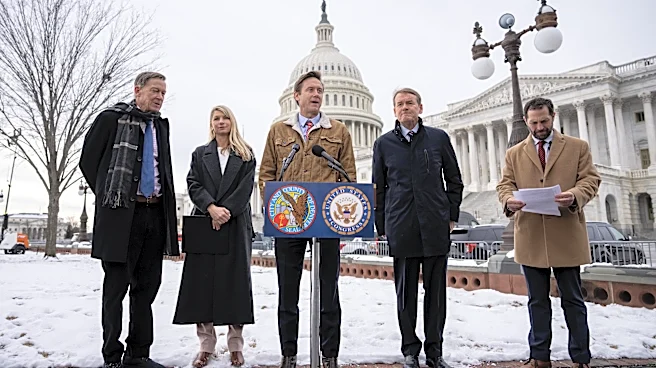
Senators McCormick and Kim introduced S. 4228, titled the 'American Competitiveness for Exports in Nuclear Energy Act of 2026' (ACE Nuclear Energy Act of 2026), in the Senate on March 26, 2026. The bill proposes amendments to the Export-Import Bank Act of 1945.
Specifically, it seeks to exclude certain financing related to civil nuclear facilities, materials, or technology from the calculation of the Export-Import Bank of the United States' (EXIM) default rate. Additionally, the legislation aims to grant EXIM's Board of Directors the authority to compensate up to 100 employees at market-competitive rates, bypassing certain federal compensation regulations. The bill has been read twice and referred to the Committee on Banking, Housing, and Urban Affairs.
Why It's Important?
This proposed legislation is significant for several reasons. By excluding civil nuclear financing from EXIM's default rate calculations, the bill aims to encourage greater EXIM support for U.S. nuclear energy exports without negatively impacting the bank's perceived financial health. This could bolster the competitiveness of the U.S. nuclear industry in global markets, aligning with national energy security and climate goals. The provision allowing market-competitive compensation for EXIM employees is intended to attract and retain top talent, enhancing the agency's operational efficiency and expertise in complex export finance. This could improve EXIM's ability to facilitate U.S. exports across various sectors, particularly in specialized areas like nuclear technology, where highly skilled personnel are crucial. The bill reflects a legislative effort to strengthen U.S. economic influence and technological leadership in critical sectors.
What's Next?
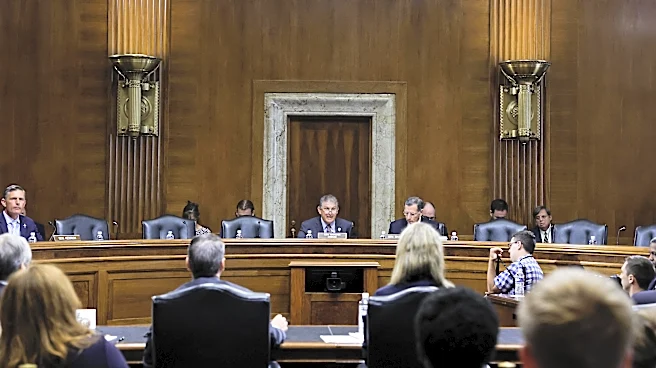
The 'ACE Nuclear Energy Act of 2026' will now undergo review by the Senate Committee on Banking, Housing, and Urban Affairs. The committee will likely hold hearings, gather expert testimony, and potentially propose amendments before deciding whether to advance the bill to the full Senate for a vote. If passed by the Senate, it would then move to the House of Representatives for consideration. The legislative process could involve negotiations and modifications as it moves through Congress. Stakeholders, including the nuclear energy industry, export businesses, and labor groups, will likely monitor its progress closely and may engage in advocacy efforts to support or amend its provisions. The bill's ultimate passage would depend on bipartisan support and its ability to navigate the legislative calendar.
Beyond the Headlines
The 'ACE Nuclear Energy Act of 2026' signals a strategic shift towards leveraging EXIM as a tool for advancing U.S. geopolitical and economic interests in the global nuclear energy sector. By de-risking nuclear financing for EXIM, the U.S. aims to counter the growing influence of competitors in the nuclear export market. This could lead to a resurgence of U.S. leadership in nuclear technology development and deployment worldwide, with implications for non-proliferation efforts and international energy security. The compensation reform aspect also highlights a broader debate about the effectiveness of federal salary structures in attracting specialized talent to government agencies, potentially setting a precedent for other critical sectors. This legislative move underscores the increasing recognition of nuclear energy's role in achieving both energy independence and climate objectives.