
What's Happening?
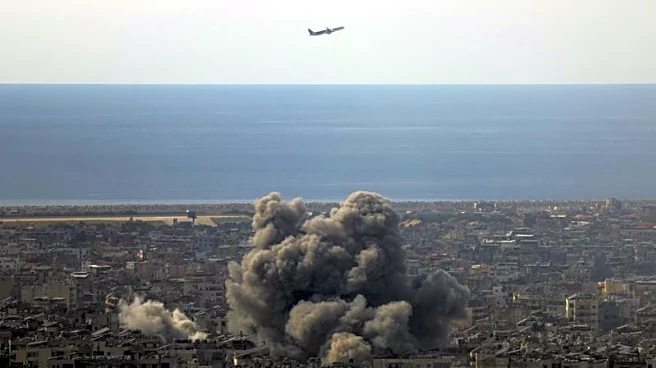
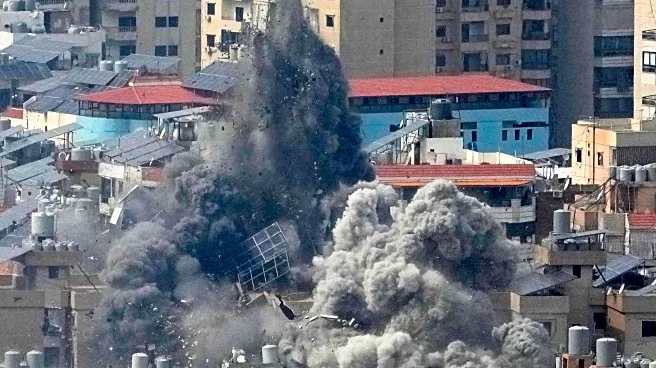
Lebanese President Joseph Aoun has called for direct negotiations with Israel to establish permanent security arrangements on their borders. This call comes amid escalating violence between Israel and Hezbollah, a militant group backed by Iran. Aoun accused
Hezbollah of betraying Lebanon by engaging in regional conflicts that have led to severe repercussions for the country. The conflict has resulted in over 600,000 people being displaced and more than 400 deaths, including many women and children. Aoun's initiative seeks international support to establish a truce and disarm Hezbollah, replacing Israeli forces in southern Lebanon with the Lebanese military. However, Lebanon's ability to disarm Hezbollah remains questionable, and Israel has shown little interest in halting its operations until Hezbollah is disarmed.
Why It's Important?
The call for direct talks with Israel is significant as it represents a shift in Lebanon's approach to the ongoing conflict. The initiative aims to stabilize the region and prevent further humanitarian crises. If successful, it could lead to a reduction in hostilities and a more stable geopolitical environment in the Middle East. However, the challenge lies in Lebanon's ability to disarm Hezbollah, which is crucial for the success of any negotiations. The international community's support is vital for Lebanon to achieve its goals, but skepticism remains about the feasibility of the initiative given the current circumstances.
What's Next?
The next steps involve seeking international backing for the proposed truce and negotiations. Lebanon will need to demonstrate its commitment to disarming Hezbollah to gain support from Israel and other stakeholders. The international community, including the U.S., may play a role in mediating talks if Lebanon can show progress in its disarmament efforts. The situation remains tense, and the outcome of Aoun's initiative will depend on the willingness of all parties to engage in diplomacy.