






What's Happening?
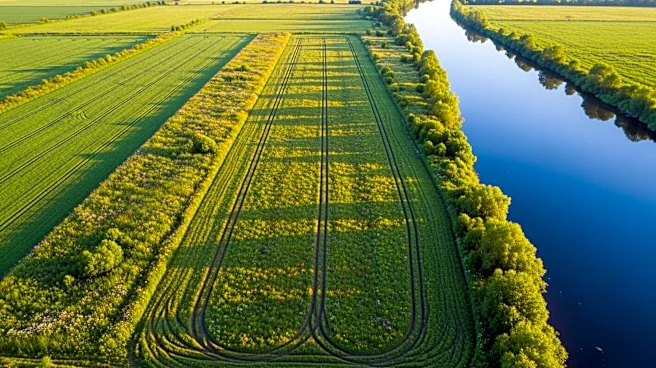
Virginia farmers are set to receive support for sustainable agriculture through a nearly $1 million grant awarded to the Chesapeake Bay Foundation. The funding, part of the Chesapeake Small Watershed Grants Program, aims to help farmers implement regenerative
agriculture and conservation practices. These practices include rotational grazing, planting streamside grass and forested buffers, and converting row crops to pasture. The grant also supports the use of virtual fence collars for livestock, which simplifies rotational grazing. The initiative is a collaboration between the Chesapeake Bay Foundation and the Virginia Forage and Grassland Council, offering educational materials and field-based instruction to farmers.
Why It's Important?
The grant is significant for promoting sustainable farming practices that enhance farm profitability, land resilience, and reduce pollution in the Chesapeake Bay area. By adopting these practices, farmers can improve the environmental health of their land while maintaining economic viability. The initiative supports broader conservation efforts across multiple states, including Maryland, Pennsylvania, and West Virginia, impacting nearly 1,700 acres. This approach not only benefits the local ecosystem but also contributes to the long-term sustainability of agriculture in the region.
What's Next?
The Chesapeake Bay Foundation and its partners plan to host a grazing school in Madison County on May 12 and 13, providing hands-on training for farmers. The program will continue to offer resources and support to farmers in Virginia and neighboring states, encouraging widespread adoption of sustainable practices. As these practices become more common, they are expected to lead to improved environmental outcomes and increased farm profitability.