





What's Happening?
Social Security is facing a significant financial crisis, with the latest Trustees' Report indicating a potential 22% benefit cut in just six years. This looming reduction stems from the program consistently spending more than it collects since 2021.
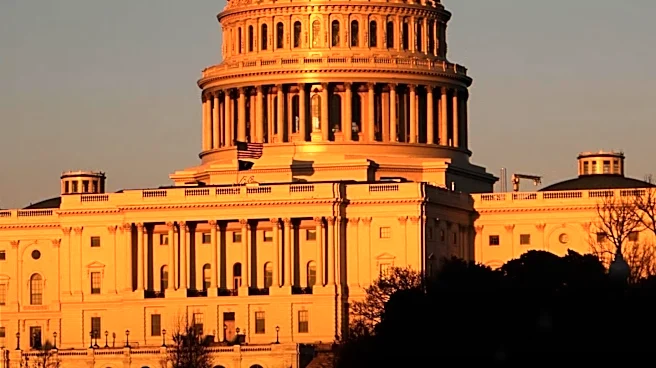
While this situation has generated recent headlines, it is not new to Washington, as Congress has been aware of the program's financial trajectory. Lawmakers are now beginning to propose various solutions to ensure the program's sustainability. However, historical patterns suggest that a definitive fix might still be several years away, as past Social Security crises, such as in the 1980s, were only resolved shortly before benefit cuts were set to take effect.
Why It's Important?
The potential 22% cut in Social Security benefits would have profound implications for millions of Americans, particularly seniors, disabled workers, and families of deceased workers who rely heavily on these payments for their living expenses. Such a reduction could lead to increased financial hardship, poverty, and a significant decrease in the quality of life for vulnerable populations. Conversely, the alternative of increasing the program's income, primarily through higher payroll taxes, would impact workers' take-home pay, potentially hindering their ability to save for retirement or cover current costs. The debate over how to address this shortfall highlights a fundamental tension between supporting current beneficiaries and ensuring the long-term solvency of the program without unduly burdening taxpayers.
What's Next?
Congress is expected to continue debating various strategies to address Social Security's financial challenges. These strategies include potential benefit cuts, increasing payroll taxes, or a combination of both. One proposed solution involves eliminating the $184,500 ceiling on income subject to Social Security payroll taxes, which would shift more of the burden onto high earners without affecting average Americans. However, given the political complexities and the lack of 'painless' solutions, a resolution is likely to be a protracted process. Individuals are advised to focus on their personal retirement planning, saving as much as possible to reduce reliance on Social Security benefits, and carefully budgeting to stretch their savings. Any changes to the program will necessitate adjustments to individual retirement strategies.
Beyond the Headlines
The Social Security crisis underscores a broader demographic challenge facing the U.S., characterized by an aging population and a shrinking workforce relative to retirees. This demographic shift places increasing strain on pay-as-you-go systems like Social Security. The political difficulty in enacting reforms reflects the deep divisions and competing interests within society, where any solution inevitably creates winners and losers. The long-term implications extend to intergenerational equity, as younger generations may bear a greater tax burden to support current retirees, while potentially receiving reduced benefits themselves. This situation also highlights the need for a national dialogue on retirement security, encouraging individuals to diversify their retirement savings beyond government programs and promoting financial literacy to prepare for an uncertain future.