







What's Happening?
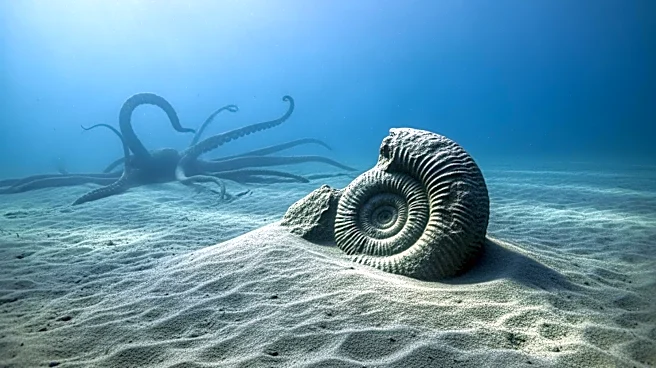
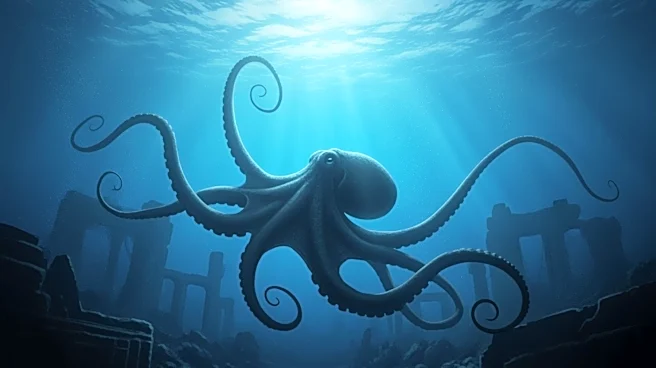
Recent research has uncovered evidence of giant octopuses that lived 100 million years ago, suggesting they were apex predators in the Cretaceous seas. These creatures, reaching up to 62 feet in length, were identified through fossilized beaks, revealing
their size and feeding habits. The study indicates that these octopuses may have rivaled other large marine predators of their time, showcasing intelligence and hunting patterns similar to modern-day octopuses.
Why It's Important?
This discovery challenges previous assumptions about marine ecosystems during the Cretaceous period, highlighting the role of invertebrates as dominant predators. It provides new insights into the evolutionary history of octopuses and their ecological significance. Understanding these ancient ecosystems can inform current conservation efforts and enhance our knowledge of marine biodiversity and evolutionary processes.
Beyond the Headlines
The study raises questions about the methods used to estimate the size and role of these ancient creatures, as some researchers caution about potential inaccuracies. It also highlights the ongoing challenges in studying soft-bodied organisms from the fossil record, emphasizing the need for advanced techniques in paleontology.