




What's Happening?
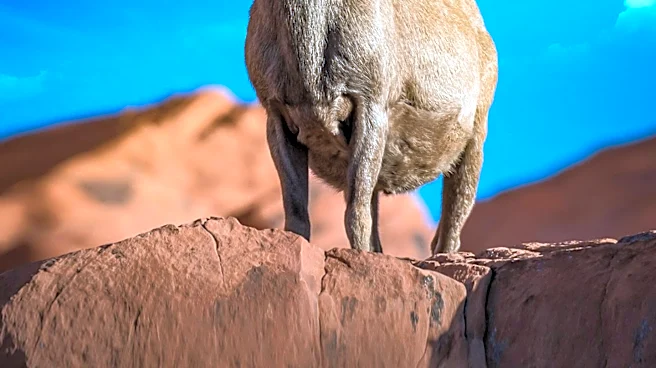
Wildlife researchers have commenced surveying areas along State Route 62 to gather data on bighorn sheep. This initiative is crucial for guiding the planning and design of two forthcoming wildlife crossings near Joshua Tree National Park. The survey is part
of a broader study examining wildlife activity, including movement and genetic exchange among bighorn sheep, mountain lions, and bobcats, across the highway at the Morongo and Yucca grades, situated between Morongo Valley and Yucca Valley. Researchers will collect animal droppings for DNA analysis to identify individual animals and understand mating patterns across the highway. This initial phase of the project, focusing on planning and design work, is scheduled to continue through April 2027. The Mojave Desert Land Trust is funding this phase through Caltrans mitigation funds, with additional grants secured from the California Wildlife Conservation Board and the Coachella Valley Mountain Conservancy.
Why It's Important?
The planned wildlife crossings are vital for restoring habitat connectivity between the San Bernardino Mountains and Little San Bernardino Mountains, thereby preserving a critical ecological corridor linking the Mojave Desert, Coachella Valley, and protected lands like the Sand to Snow National Monument. This fragmentation of habitat by State Route 62 has significantly impacted species like bighorn sheep, deer, black bears, and mountain lions, hindering their movement and genetic exchange. A major objective of these crossings is to drastically reduce wildlife-vehicle collisions, which have been a significant concern; for instance, from October 2019 to November 2020, there were 232 fatal wildlife-vehicle collisions on State Route 62 involving various animals. The genetic studies conducted during this phase will provide a baseline to assess the long-term health and connectivity of wildlife populations, ensuring more resilient ecosystems and safer roads for both wildlife and human commuters.
What's Next?
The current phase of the study, which involves surveying and data collection for planning and design, will continue until April 2027. Following this, a second phase, contingent on securing additional funding, is projected to run through December 2029 and will include roadkill surveys starting in spring 2027. A third phase of study is anticipated after the construction of the crossings. While researchers have sufficient data for general locations, ongoing studies may lead to minor adjustments in the specific alignments of the crossings based on new information about wildlife movement. The Mojave Desert Land Trust and its partners are actively working to secure funding for the implementation and construction phases, as no firm timeline has been established for completion, though officials estimate it could take seven to eight years for both crossings to be built.
Beyond the Headlines
The development of wildlife crossings near Joshua Tree National Park reflects a growing national trend towards mitigating the ecological impact of infrastructure on natural habitats. This project, alongside others like the Wallis Annenberg Wildlife Crossing in Agoura Hills and multiple crossings planned for Interstate 15, highlights a broader recognition of the need for integrated conservation strategies. The use of advanced techniques, such as DNA analysis from animal droppings and detection dogs, underscores a scientific approach to understanding and addressing habitat fragmentation. This initiative not only aims to protect individual species but also to maintain the genetic diversity essential for the long-term survival of wildlife populations in increasingly urbanized and developed landscapes. The success of these projects could set precedents for future conservation efforts, emphasizing the ethical responsibility to coexist with wildlife and preserve biodiversity.