








What's Happening?
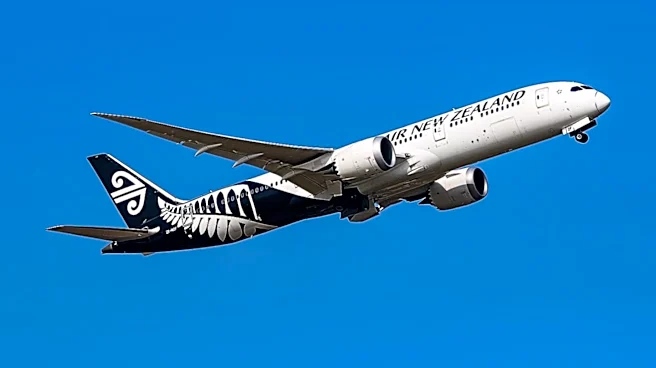
Air New Zealand reported an improvement in its operational performance for June, with 86% of flights arriving within 15 minutes of schedule, a significant increase from 78.3% in the same month last year. This improvement is attributed to a reduction in reactionary
delays, which were cut by more than half. However, the airline experienced an increase in total cancellations to 3.3% of scheduled flights, primarily due to external factors such as severe weather and disruptions from a fire at Wellington Airport. Only 0.7% of cancellations were within the airline's control, down from 1.7% the previous year. The airline is focusing on building a more resilient operation by improving reliability and execution discipline.
Why It's Important?
The improvement in Air New Zealand's on-time performance is crucial for maintaining customer satisfaction and operational efficiency. Reducing reactionary delays helps minimize disruptions across the network, enhancing the airline's reputation for reliability. The increase in cancellations, although largely due to uncontrollable factors, highlights the challenges airlines face in maintaining schedules amidst external disruptions. Air New Zealand's efforts to build resilience and prioritize customer service are essential for its competitive positioning in the aviation industry, especially as travel demand continues to recover post-pandemic.
What's Next?
Air New Zealand is likely to continue implementing strategies to enhance operational resilience and minimize disruptions. This may involve further adjustments to schedules, investment in technology, and staff training to improve day-of execution discipline. The airline will also need to address the challenges posed by external factors, such as weather and infrastructure issues, to maintain its improved performance. Ongoing communication with customers and stakeholders will be key to managing expectations and maintaining trust.