


What's Happening?
The United States and Pakistan have conducted a joint military exercise named 'Inspired Gambit-2026'. This collaboration has drawn criticism from Indian Congress leader Jairam Ramesh, who argues that the exercise highlights the failure of India's foreign
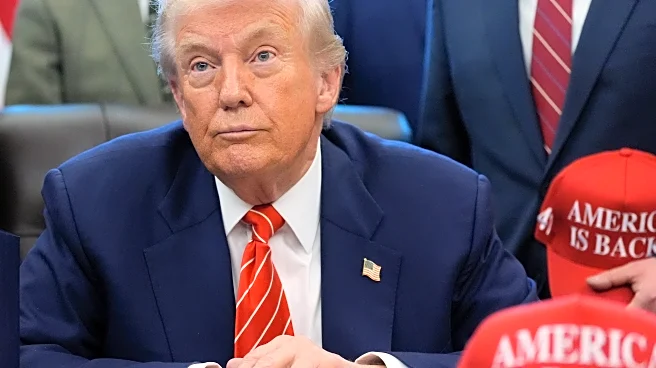
policy. The exercise follows a history of U.S.-Pakistan military cooperation, with past acknowledgments from U.S. officials praising Pakistan's role in counter-terrorism. President Trump has also claimed credit for averting a potential conflict between India and Pakistan, asserting that his intervention saved millions of lives. The joint exercise has been perceived as a diplomatic setback for India, which has been striving to assert its influence in the region.
Why It's Important?
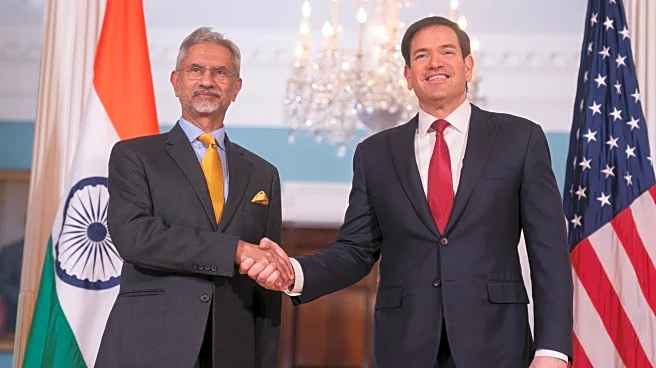
The joint military exercise between the U.S. and Pakistan underscores the complex geopolitical dynamics in South Asia. For India, this development is seen as a challenge to its diplomatic efforts to isolate Pakistan on the global stage due to its alleged support for terrorism. The exercise may also influence U.S.-India relations, as India is a key strategic partner for the U.S. in countering China's influence in the Indo-Pacific region. The collaboration could potentially shift regional power balances and impact ongoing diplomatic negotiations. Additionally, President Trump's involvement in de-escalating tensions between India and Pakistan highlights the U.S.'s role as a mediator in South Asian conflicts.
What's Next?
The joint exercise may prompt India to reassess its foreign policy strategies and strengthen its diplomatic engagements with the U.S. and other allies. India might also increase its military readiness and seek to enhance its defense capabilities through new alliances and partnerships. The exercise could lead to further diplomatic dialogues between the U.S., India, and Pakistan to address regional security concerns. Additionally, the exercise may influence future U.S. foreign policy decisions regarding military collaborations in South Asia.