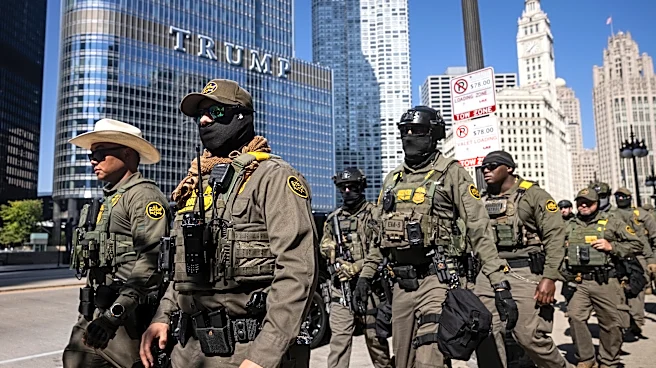








What's Happening?
U.S. Immigration and Customs Enforcement (ICE) is set to revert to a 72-day training program for new deportation officers, restoring previous standards after a shortened 42-day program was implemented last year. This decision comes after criticism from
Democrats and former law enforcement officials who argued that the reduced training period was insufficient for preparing officers, especially as the Trump administration aimed to increase detentions and deportations. The change, effective July 1, follows a hiring surge that doubled the number of immigration officers to 22,000. Homeland Security Secretary Markwayne Mullin, who assumed office in March, has committed to restoring public confidence in ICE following incidents involving fatal shootings by immigration officers. Despite the return to longer training, ICE maintains that its training program is rigorous and includes on-the-job mentorship.
Why It's Important?
The decision to extend the training period for ICE officers is significant as it addresses concerns about the adequacy of training for officers tasked with enforcing immigration laws. The move could impact public perception and trust in ICE, especially in light of past controversies involving the agency's enforcement actions. By ensuring officers are better prepared, the agency aims to mitigate risks associated with enforcement operations, potentially reducing incidents of excessive force or legal missteps. This change also reflects a shift in the administration's approach to immigration enforcement, balancing the need for effective law enforcement with public accountability and safety.
What's Next?
As ICE implements the longer training program, it may face scrutiny from both immigration hard-liners and advocates. Hard-liners may view the change as a step back from aggressive enforcement policies, while advocates may push for further reforms to ensure humane and lawful treatment of immigrants. The agency's future actions, particularly in high-profile enforcement operations, will likely be closely monitored by both Congress and civil society groups. Additionally, the impact of the extended training on officer performance and public safety will be evaluated over time.