






What's Happening?
Kellogg’s Breakfast tomatoes, an American heirloom variety, are gaining recognition for their large size, dense flesh, and sweet flavor. These tomatoes are botanically classified as Solanum lycopersicum and are an open-pollinated, indeterminate variety, meaning
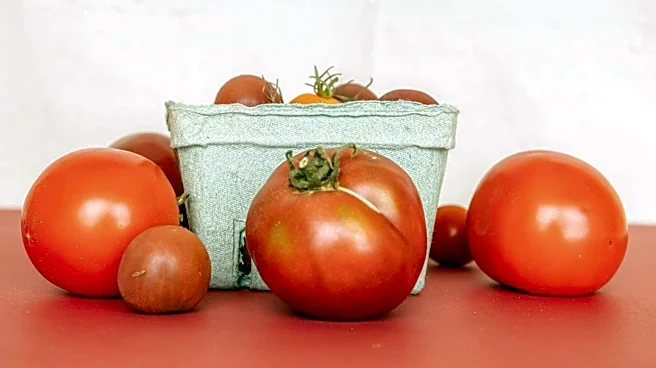
their vines can grow up to three meters and require support structures. They are typically harvested 80 to 90 days after transplanting and continue to produce fruit until the first frost. The variety is known for its brilliant golden yellow and orange skin, often displaying distinct scarring and striations. Underneath, the flesh is dense, aqueous, and succulent, with a rich, sweet, tangy, and sometimes salty flavor. These tomatoes are versatile, suitable for both raw and cooked preparations, and are particularly prized as slicing tomatoes for burgers and sandwiches. They are also used in bruschetta, salads, salsas, juices, and can be simmered into sauces or preserved.
Why It's Important?
The resurgence of heirloom varieties like Kellogg’s Breakfast tomatoes highlights a growing consumer interest in unique flavors and sustainable agricultural practices within the U.S. food market. Unlike many commercially grown tomatoes, heirloom varieties are open-pollinated, allowing gardeners and small-scale farmers to save seeds and maintain genetic diversity. This contributes to food security and offers consumers alternatives to mass-produced, often less flavorful, hybrid varieties. The popularity of Kellogg’s Breakfast tomatoes, evidenced by their wins in taste awards and festival competitions, indicates a market demand for high-quality, distinctive produce. This trend can support local economies by encouraging specialty farms and wholesalers, and it also promotes a deeper connection between consumers and the origins of their food. The variety's resilience and prolific nature make it an attractive option for home gardeners, further fostering a culture of self-sufficiency and appreciation for diverse agricultural heritage.
What's Next?
The continued promotion of Kellogg’s Breakfast tomatoes through platforms like the Seed Savers Exchange suggests a sustained effort to distribute this heirloom variety more widely among growers and home gardeners across the United States. As consumer demand for unique and flavorful produce grows, specialty farms and wholesalers are likely to increase their cultivation and distribution of these tomatoes. Educational initiatives focusing on the benefits of heirloom varieties, including their flavor profiles and genetic diversity, could further boost their popularity. Additionally, culinary professionals may increasingly feature Kellogg’s Breakfast tomatoes in their dishes, showcasing their versatility and distinct taste, which could drive further market interest. The ongoing availability of seeds and cultivation knowledge will be crucial for the long-term preservation and expansion of this variety.
Beyond the Headlines
The story of Kellogg’s Breakfast tomatoes extends beyond their culinary appeal, touching upon themes of agricultural heritage and the preservation of biodiversity. The tomato was named after Darrell Kellogg, a railroad supervisor and passionate heirloom tomato grower, who obtained the seeds from a friend in West Virginia. This personal connection underscores the grassroots nature of heirloom preservation, often driven by individuals dedicated to maintaining unique plant varieties. The theory behind the 'breakfast' in its name, linking its orange color to orange juice, illustrates how cultural narratives and folklore become intertwined with agricultural products. This narrative adds a layer of cultural significance, transforming a simple fruit into a story-rich item. The efforts to preserve and share such varieties, like through the Seed Savers Exchange, are vital for safeguarding agricultural diversity against the dominance of a few commercial strains, ensuring a richer and more resilient food system for future generations.