



What's Happening?
Merriam-Webster defines 'snowpack' as a seasonal accumulation of slow-melting packed snow. Recent examples from online sources illustrate its usage, particularly in discussions about weather patterns and climate. For instance, NPR reported on October
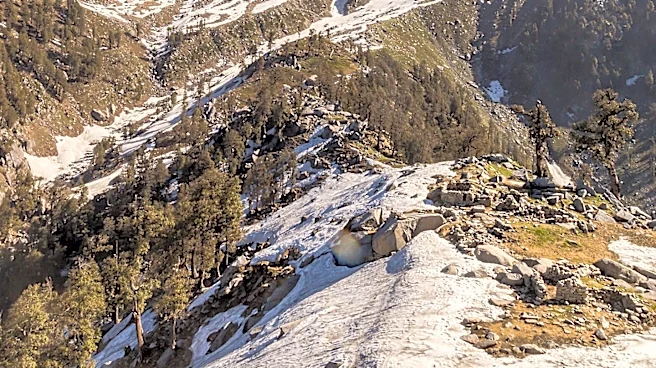
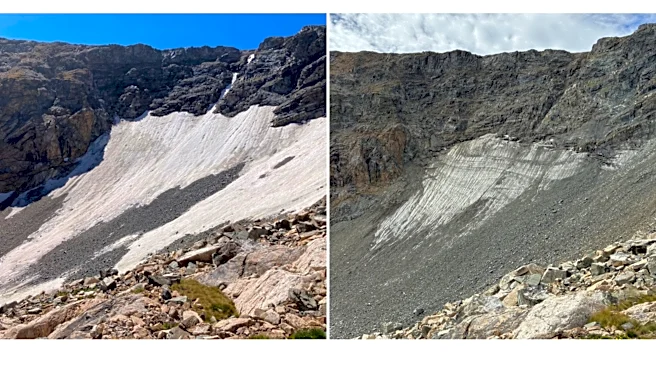
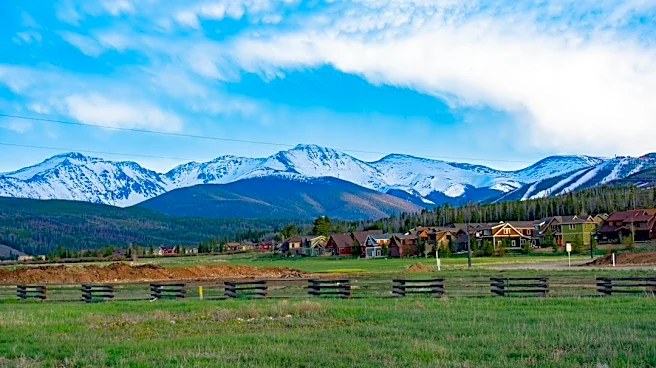
29, 2026, that the Midwest, especially the Upper Midwest, is expected to experience a smaller snowpack than normal due to warmer temperatures. ABC News noted on October 27, 2026, that the state's worst snowpack on record, followed by record summer heat, left year-round ice masses in the Rocky Mountains exposed. Additionally, Sacbee.com projected on October 21, 2026, that by midcentury, April snowpack is expected to shrink by approximately 40%.
Why It's Important?
The definition and current usage of 'snowpack' are crucial for understanding environmental and climatic trends, particularly in regions reliant on snowmelt for water resources. A reduced snowpack, as indicated by reports from NPR and Sacbee.com, can lead to significant implications for water supply, agriculture, and ecosystems. Lower snowpack levels can result in droughts, impact hydroelectric power generation, and increase the risk of wildfires due to drier conditions. The exposure of ice masses in the Rocky Mountains, as reported by ABC News, highlights the broader effects of climate change on natural landscapes and long-term water storage. These changes affect various sectors, from urban water management to agricultural productivity and recreational industries.
What's Next?
Continued monitoring of snowpack levels will be essential for water resource management and climate scientists. Forecasts of smaller snowpacks, particularly in regions like the Midwest, will likely prompt discussions and planning for water conservation measures and drought preparedness. Agricultural communities may need to adapt their practices to account for reduced water availability. Researchers will continue to study the long-term impacts of diminishing snowpack on regional climates and ecosystems. Public awareness campaigns about water conservation may also become more prevalent in affected areas. Policy discussions regarding climate change mitigation and adaptation strategies are also likely to intensify as these trends persist.
Beyond the Headlines
The concept of 'snowpack' extends beyond a simple meteorological definition; it serves as a critical indicator of climate health and water security. Its decline, as evidenced by recent reports, underscores the tangible effects of global warming on regional environments. This has profound implications for biodiversity, as many species depend on consistent snowmelt for their habitats and life cycles. Furthermore, the economic stability of communities reliant on snow-fed rivers for irrigation, drinking water, and tourism (e.g., ski resorts) is directly threatened. The ongoing changes in snowpack patterns highlight the urgent need for comprehensive climate action and sustainable resource management strategies to mitigate future environmental and socio-economic challenges.