
What's Happening?
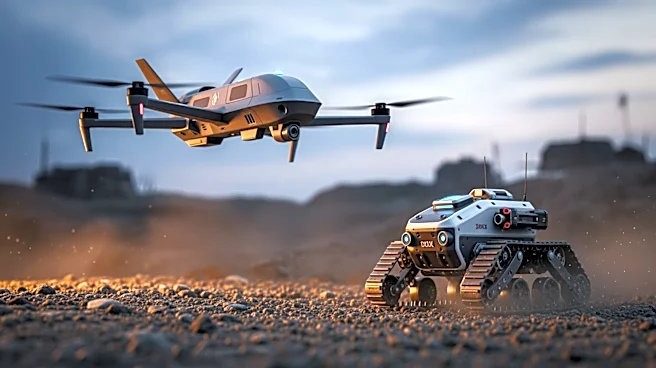
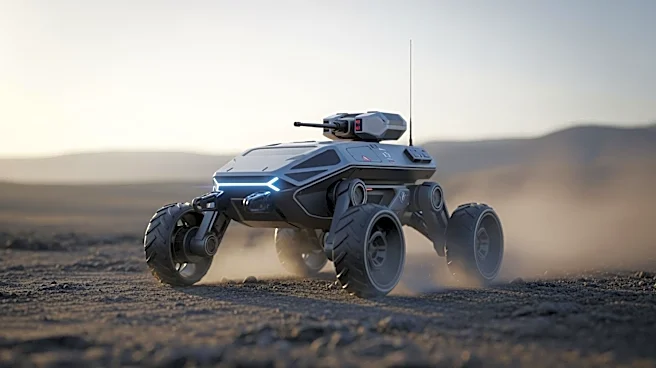
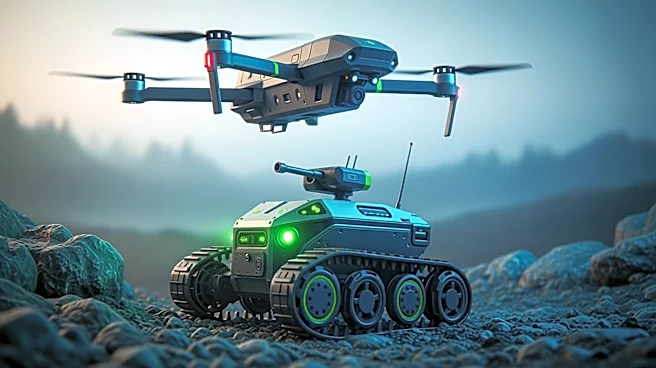
Ukraine has achieved a significant milestone in its ongoing conflict with Russia by capturing a Russian position using only aerial drones and ground robots, marking the first time such technology has been
used exclusively in this manner. President Volodymyr Zelenskyy announced that the operation was conducted without any Ukrainian casualties, highlighting the effectiveness of unmanned platforms in modern warfare. Over the past three months, Ukrainian ground robots have completed more than 22,000 missions, significantly reducing the risk to human soldiers. This development underscores Ukraine's strategic shift towards leveraging technology to compensate for its smaller population and limited access to Western weaponry.
Why It's Important?
The use of drones and ground robots by Ukraine represents a transformative approach to warfare, potentially altering military strategies worldwide. By minimizing human involvement in direct combat, Ukraine is not only preserving lives but also setting a precedent for future conflicts. This technological advancement has captured the attention of NATO and Western countries, which are now considering similar strategies. The success of these unmanned systems could lead to increased investment in drone and robotic technologies, reshaping military doctrines and training programs globally. Additionally, Ukraine's innovative use of technology may influence other nations to adopt similar tactics, thereby changing the landscape of modern warfare.
What's Next?
As Ukraine continues to integrate drones and ground robots into its military operations, other countries are likely to follow suit, leading to a broader adoption of unmanned systems in warfare. NATO allies are already adjusting their training and tactics based on Ukraine's experiences, which could result in a shift towards more technology-driven military strategies. Furthermore, the success of these systems may prompt increased collaboration between Ukraine and its allies in developing anti-drone solutions and enhancing robotic capabilities. This evolution in military technology could also spur discussions on the ethical implications of using unmanned systems in combat.