





What's Happening?
Idaho officials, including Governor Brad Little and U.S. Senators Jim Risch and Mike Crapo, are backing a proposed revision to the Endangered Species Act's '4(d) rule' by the U.S. Fish and Wildlife Service. This proposal aims to shift management responsibility
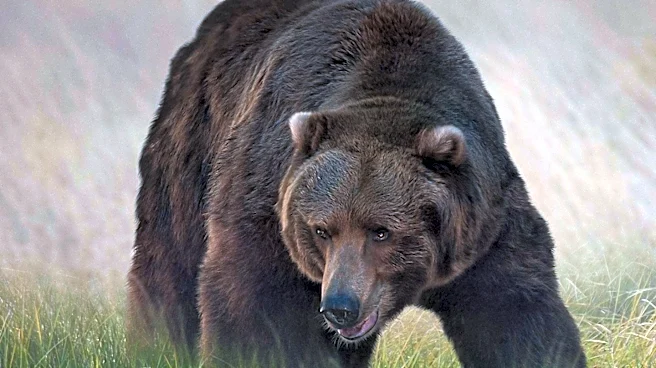
for grizzly bear recovery to state levels, granting Idaho, Montana, and Wyoming greater control. Currently, the '4(d) rule' makes harming or killing grizzlies illegal unless specifically permitted by federal authorities. The proposed change would allow the U.S. Fish and Wildlife Service to create specific rules for species designated as 'threatened,' potentially expanding the circumstances under which grizzly bears could be killed. Attorney General Raúl Labrador has also submitted formal comments supporting the change, arguing that Idaho has successfully grown its grizzly bear population and that the federal government should acknowledge this success. Conservation groups, however, are criticizing the proposal, expressing concerns that it could jeopardize grizzly bear recovery by weakening federal protections and allowing for potentially unlimited mortality outside core recovery areas.
Why It's Important?
This proposed rule change carries significant implications for wildlife management and federal-state relations in the U.S. If enacted, it would empower states like Idaho, Montana, and Wyoming with more authority over grizzly bear populations, potentially leading to different management strategies than those currently overseen by federal agencies. Proponents argue that local wildlife agencies possess a better understanding of their specific environments and can make more effective conservation decisions without bureaucratic inefficiencies. This shift could set a precedent for how other threatened species are managed across the country, potentially influencing the balance of power between federal and state environmental regulations. Conversely, environmental groups warn that weakening federal oversight could reverse decades of recovery efforts for grizzly bears, which were listed under the Endangered Species Act in 1975 when only an estimated 300 to 400 were left in the wild. The outcome of this proposal will determine the future of grizzly bear populations in the contiguous U.S. and could reshape the landscape of wildlife conservation policy.
What's Next?
The U.S. Fish and Wildlife Service will continue to review comments submitted by various stakeholders, including state leaders and environmental organizations, regarding the proposed revision to the '4(d) rule.' Following this review period, the Service will decide whether to implement the proposed changes, modify them, or maintain the current regulations. If the rule is revised, it is highly probable that environmental groups will challenge the decision through legal avenues, potentially leading to protracted court battles. These legal challenges would focus on whether the revised rule adequately protects grizzly bears under the Endangered Species Act and if it aligns with scientific conservation principles. The states involved, particularly Idaho, Montana, and Wyoming, will likely prepare to assume greater management responsibilities if the proposal is approved, which could include developing new state-specific regulations and management plans for grizzly bears. The ongoing debate highlights the tension between state autonomy and federal protection mandates for endangered species.
Beyond the Headlines
The debate surrounding the grizzly bear management proposal extends beyond immediate conservation concerns, touching upon fundamental questions of federalism and the role of science versus politics in environmental policy. The argument from Idaho leaders that local agencies understand their environment best reflects a broader push for states' rights in managing natural resources, often seen in Western states. However, conservationists counter that state-level management can be susceptible to political pressures that may override scientific recommendations, potentially jeopardizing species recovery. This situation underscores the delicate balance between economic interests, such as those of hunters and rural communities, and the long-term ecological health of endangered species. The outcome could influence how future endangered species listings and delistings are handled, potentially setting a precedent for increased state involvement in species management. It also highlights the ongoing legal and ethical discussions about human-wildlife coexistence and the interpretation of the Endangered Species Act's intent.