







What's Happening?
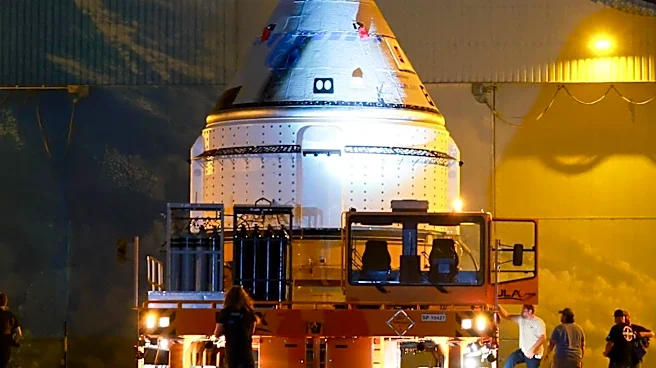
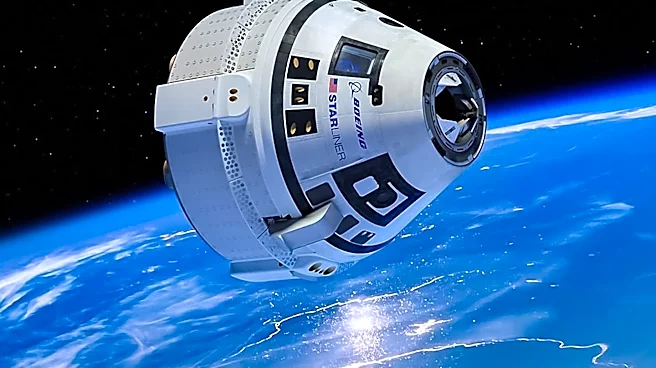
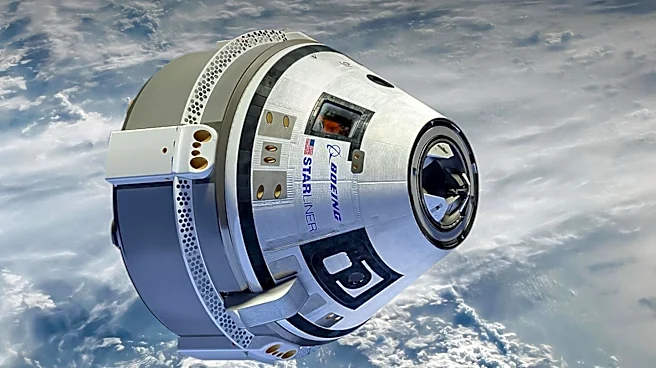
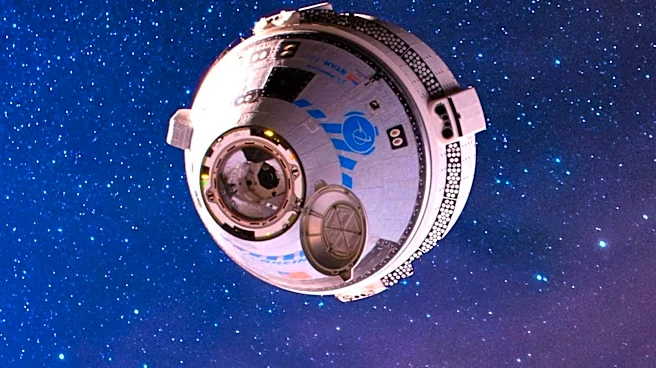
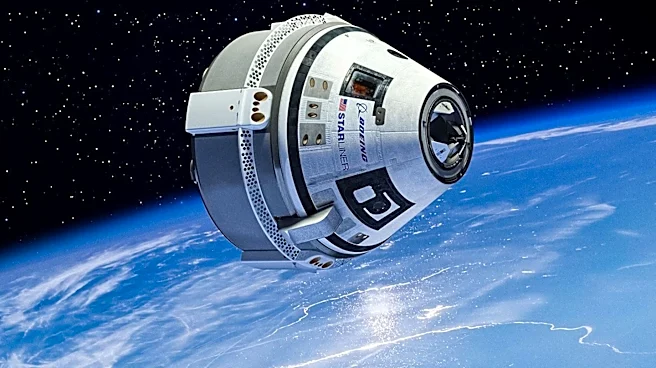
NASA's inspector general has released an audit highlighting ongoing delays in Boeing's Starliner crew capsule program, which is part of NASA's Commercial Crew Program. The report indicates that the Starliner will not be certified for operational flights
to the International Space Station (ISS) until at least next year. Since 2020, Boeing's flight tests have encountered numerous issues, leading to an additional six years of delays. Key technical challenges include helium leaks, propulsion-system failures, and parachute anomalies, which have yet to be resolved. The report criticizes NASA's overconfidence in Boeing's design and the establishment of unrealistic schedules, which have compounded the delays. As a result, NASA has paid SpaceX an additional $17 million to accelerate two flights to maintain its crew-rotation schedule to the ISS.
Why It's Important?
The delays in Boeing's Starliner program have significant implications for NASA's ability to maintain a consistent crew presence on the ISS. The reliance on SpaceX to fill the gap underscores the importance of having multiple reliable partners in the Commercial Crew Program. The additional costs incurred by NASA to accelerate SpaceX flights highlight the financial impact of the delays. Furthermore, the report raises concerns about NASA's oversight and decision-making processes, which could affect future collaborations and projects. The ongoing issues with the Starliner also emphasize the challenges of developing new spaceflight technologies and the risks associated with over-reliance on a single contractor.
What's Next?
NASA and Boeing will need to address the unresolved technical challenges to achieve human-rating certification for the Starliner. This will involve resolving helium leaks, propulsion-system failures, and parachute anomalies. NASA's inspector general suggests that the agency's workforce constraints may further hinder oversight and resolution of these issues. Meanwhile, SpaceX will continue to provide crew transportation to the ISS through its Crew-13 and Crew-14 missions, scheduled to maintain operations until October 2027. The situation may prompt NASA to reassess its contract management and oversight strategies to prevent similar issues in future programs.