









What's Happening?
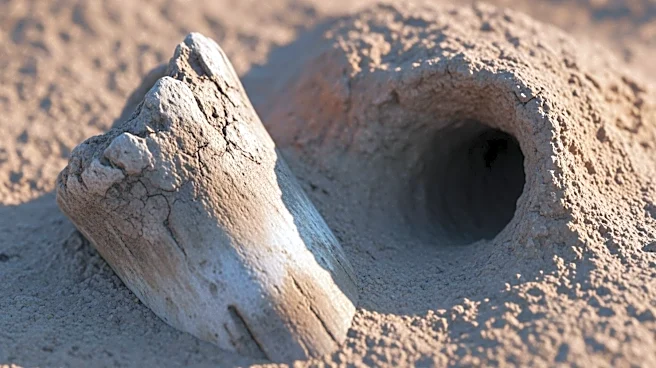
Scientists have discovered a vast collection of ancient DNA, including that of extinct woolly mammoths, in frozen squirrel faeces in Canada's Yukon territory. The DNA, dating from 3,000 to 700,000 years ago, was found in sealed-off burrows, providing
a unique glimpse into historical biodiversity. The research, led by Tyler Murchie from McMaster University, highlights the potential of faeces as a source of ancient genetic material. The study also reconstructed mitochondrial genomes of various species, offering insights into the evolution of the woolly mammoth.
Why It's Important?
This discovery is significant as it provides a new method for studying ancient DNA, offering insights into past ecosystems and species evolution. The findings could aid in understanding how species adapted to environmental changes over millennia. Additionally, the genetic data could contribute to de-extinction efforts, such as those by the company Colossal, which aims to resurrect the woolly mammoth. This research underscores the potential of unconventional sources like faeces in paleogenomics, expanding the tools available for studying ancient life.