




What's Happening?
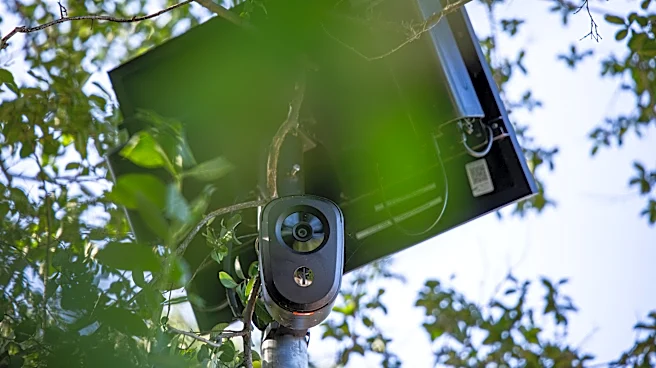
The ACU Police Department (ACUPD) has installed four Flock cameras, which are automated license plate readers, at the main intersections surrounding the campus. These cameras, manufactured by Flock, are owned by the university and maintained by ACUPD.
ACUPD Chief Jason Ellis stated that the system is not designed for real-time monitoring and does not include facial recognition or capture images of vehicle interiors. The cameras record license plate numbers, vehicle make, model, color, distinguishing features, and the date, time, and location of passage. This data is retained for 30 days before automatic deletion, with the exception of search logs. An internal 'hot list' feature allows for automatic alerts if a flagged license plate (e.g., associated with a stolen vehicle or criminal trespass order) crosses a camera. Lieutenant Matthew Fox highlighted the security of ACU’s NEXT Lab, which houses an advanced nuclear reactor, as a key driver for the camera installation, aiming to identify unauthorized individuals. The cameras are strategically placed to cover all vehicle entry and exit points of the campus. While the city of Abilene also uses Flock cameras, the ACU system is independently owned and operated, with ACUPD controlling its data. The Abilene Police Department and Taylor County Sheriff’s Office can request data but do not have on-demand access; all requests require a case number. Internally, only supervisors and one detective can run searches, and all searches are logged for auditing purposes to prevent misuse.
Why It's Important?
The deployment of Flock cameras by ACUPD reflects a growing trend among institutions and law enforcement agencies to utilize automated license plate readers for security and crime prevention. This move highlights the ongoing balance between enhancing public safety and addressing privacy concerns associated with surveillance technology. ACUPD's emphasis on limited data retention (30 days), the absence of real-time monitoring, and strict access protocols aims to mitigate some of the common criticisms leveled against such systems, particularly regarding mass surveillance. The specific mention of securing ACU's NEXT Lab, which contains an advanced nuclear reactor, underscores the heightened security needs of certain facilities and how this technology is being adopted to meet those demands. The clear distinction between ACU's system and the city's, along with the explicit exclusion of federal agencies like U.S. Immigration and Customs Enforcement (ICE) from accessing the data, is crucial for maintaining community trust and addressing national scrutiny over potential ties to federal immigration enforcement. This case serves as an example of how local entities are navigating the implementation of advanced surveillance tools while attempting to establish safeguards and transparency.
What's Next?
ACUPD plans to track usage and communicate information about the system through a dedicated Flock transparency page. This page will provide data and information relevant to students, faculty, parents, and community members who use the Lunsford Trail daily, aiming to foster transparency and address public concerns about surveillance on campus. The department will continue to conduct audits of search logs to ensure there is no misuse of the system, reinforcing their commitment to accountability. The ongoing public discourse around Flock cameras nationally suggests that the debate over their use, privacy implications, and effectiveness will persist. Other institutions and municipalities considering similar deployments may look to ACU's approach as a model for implementing such technology with built-in safeguards and transparency measures. The effectiveness of these cameras in deterring crime, as suggested by Chief Ellis, will likely be a key metric for evaluating their continued use and potential expansion.
Beyond the Headlines
The implementation of Flock cameras at ACU, despite its stated safeguards, touches upon broader ethical and societal implications concerning the increasing pervasiveness of surveillance technologies in everyday life. While presented as a tool for crime deterrence and enhanced security, particularly for sensitive facilities like nuclear labs, the very presence of automated license plate readers contributes to a societal shift towards constant monitoring. The debate over 'surveillance' versus 'safety' is a nuanced one, where the perceived benefits of crime prevention must be weighed against potential infringements on civil liberties and the right to privacy. The fact that such systems are not built for real-time monitoring and have limited data retention is a step towards addressing privacy concerns, but the underlying capability to track movements and build patterns of activity remains. This scenario also highlights the evolving role of private companies in providing surveillance infrastructure to public entities, raising questions about data ownership, third-party access, and the potential for mission creep beyond initial intentions. The ongoing challenge for communities and institutions will be to establish robust governance frameworks that ensure accountability, prevent abuse, and maintain public trust in an increasingly surveilled environment.