






What's Happening?
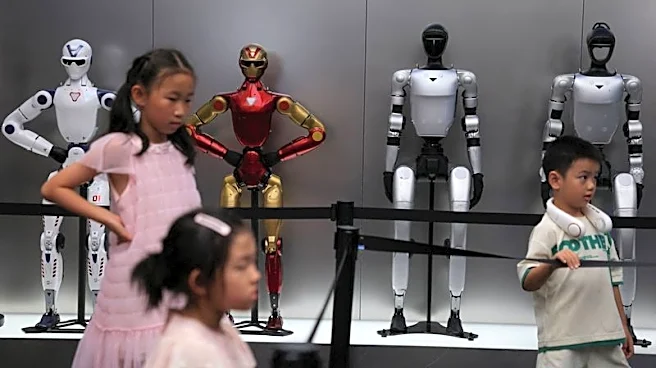
Despite the availability of humanoid robots for preorder, such as 1X Technologies' Neo and Weave Robotics' Isaac 1, the reality of these machines performing household chores in homes is still far off. Companies are showcasing advanced prototypes and demo
videos, creating an impression that these robots are nearly ready for consumer use. However, experts in robotics, including Rodney Brooks from MIT, argue that significant challenges remain in physical design, engineering, hardware reliability, and especially in developing the necessary AI and training data for robots to coexist safely and effectively in complex, unpredictable home environments. Current prototypes often rely on remote human operation, and the physical dangers, privacy risks, and lack of standardization in home layouts present substantial obstacles to widespread adoption.
Why It's Important?
The gap between the hype and reality of humanoid robots for home use has significant implications for consumer expectations, investment in robotics, and the future of domestic technology. Overpromising capabilities can lead to consumer disillusionment and hinder the long-term adoption of robotics. For the U.S. technology and manufacturing sectors, understanding these challenges is crucial for strategic investment and research. The current limitations highlight that the development of true general-purpose domestic robots requires breakthroughs not just in hardware, but critically in artificial intelligence, particularly in physical AI and world models that allow robots to understand and adapt to dynamic environments. This situation also underscores the importance of focusing on practical, single-task robots, like advanced robot vacuums, which have seen substantial progress, rather than prematurely pushing for complex humanoids that are not yet viable.
What's Next?
The robotics industry is expected to continue its phased evolution. In the next 3-5 years, more basic fetch-and-carry robotic assistants capable of some manipulation in controlled environments might emerge. Multifunctional assistants requiring occasional human help are projected within 5-10 years. Fully autonomous humanoids capable of robust domestic tasks and physical care are estimated to be 20+ years away. Companies will likely focus on overcoming hardware challenges, such as integrating micro-servos for dexterous hands, mass-producing durable joints, and improving battery endurance. A major focus will also be on developing advanced physical AI models through extensive real-world data collection and sophisticated simulators. The commercial and industrial sectors are expected to see earlier and more widespread adoption of humanoid robots due to their structured environments and clear return on investment, before these technologies mature enough for safe and effective home integration.
Beyond the Headlines
The aspiration for humanoid robots in homes touches upon profound societal and ethical questions. Beyond the technical hurdles, the integration of such advanced machines into intimate domestic spaces raises concerns about privacy, safety, and the nature of human-robot interaction. The potential for physical harm from a heavy, complex machine, as well as the privacy implications of mobile robots equipped with cameras and sensors, are critical considerations. The debate between human-like design (bipedal, five-fingered hands) and more functional, appliance-like forms reflects a deeper philosophical discussion about what we want robots to be: companions, tools, or something in between. The long timeline for fully autonomous domestic humanoids suggests that the 'robot revolution' will be a gradual evolution, forcing society to continually re-evaluate its relationship with artificial intelligence and automation in the most personal of settings.