



What's Happening?
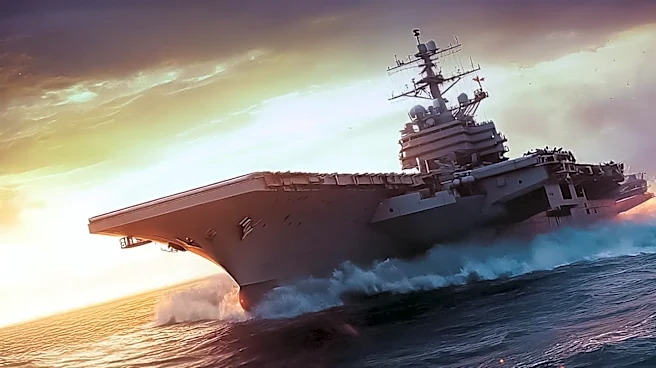
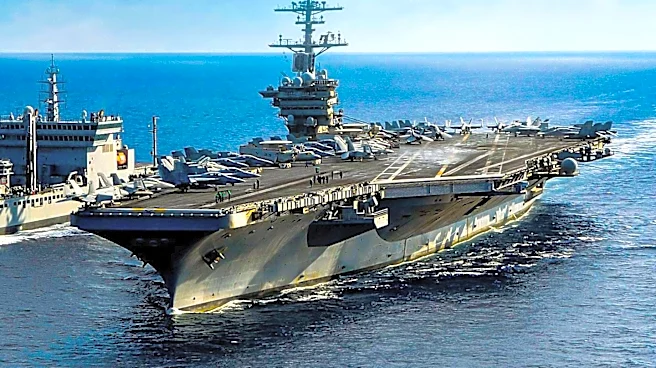
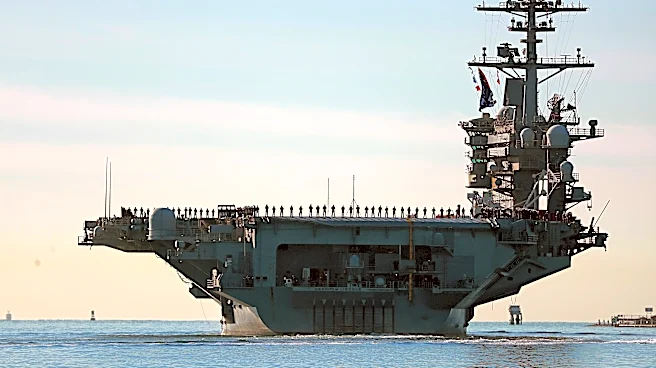
U.S. Central Command Commander Adm. Brad Cooper recently shared his firsthand account of visiting the USS Abraham Lincoln, highlighting the extraordinary dedication of its crew. Adm. Cooper described the sailors' unwavering commitment to their country,
mission, and each other during what he characterized as one of the most intense and consequential deployments in modern naval history. His observations, detailed in an op-ed, noted that many concerns previously reported in the media, such as issues with food and hot water, had been addressed and resolved by leadership. Despite the crew being tired from over 260 days at sea, including more than 150 days in a combat zone, they continue to operate at peak performance. Adm. Cooper's visit aimed to provide an updated perspective on operational tempo and crew morale, countering some earlier portrayals.
Why It's Important?
This report is important as it offers a direct and high-level assessment of the morale and operational effectiveness of a key U.S. naval asset during a demanding deployment. The USS Abraham Lincoln's sustained performance in a combat zone underscores the U.S. military's capacity for prolonged operations and its ability to adapt to and resolve internal challenges. The commander's positive remarks can boost the morale of service members and their families, while also reassuring the public and international allies about the readiness and resilience of the U.S. Navy. Furthermore, the addressing of previously reported issues demonstrates accountability and responsiveness within military leadership, which is crucial for maintaining trust and operational integrity. The deployment's characterization as 'one of the most operationally intense and consequential' highlights the ongoing geopolitical complexities and the critical role of naval power in projecting U.S. influence and ensuring national security.
What's Next?
The continued high operational tempo of U.S. naval forces, as exemplified by the USS Abraham Lincoln's deployment, suggests that similar demanding missions will likely persist in response to global security challenges. Military leadership will continue to monitor and address crew welfare to sustain long-term readiness and combat effectiveness. Future reports and assessments from U.S. Central Command will likely focus on maintaining this level of performance and addressing any emerging challenges related to personnel and resources. The insights gained from this deployment may also inform future naval strategies and resource allocation, particularly concerning the support and well-being of deployed personnel. The U.S. Navy will continue to conduct exercises and deployments to maintain its global presence and operational capabilities.
Beyond the Headlines
The narrative surrounding the USS Abraham Lincoln's deployment extends beyond immediate operational success to touch upon the broader societal implications of military service. The acknowledgment of a 'tired' but 'firing on all cylinders' crew highlights the immense personal sacrifices made by service members and their families. This situation brings to light the psychological and physical toll of prolonged deployments and the critical need for robust support systems, including mental health services and family assistance programs. The resolution of issues like food and hot water, while seemingly minor, speaks to the fundamental importance of basic living conditions in maintaining morale and operational effectiveness in high-stress environments. This also underscores the ongoing challenge for military leadership to balance operational demands with the well-being of its personnel, a balance that is crucial for the long-term health and sustainability of the all-volunteer force.