
What's Happening?
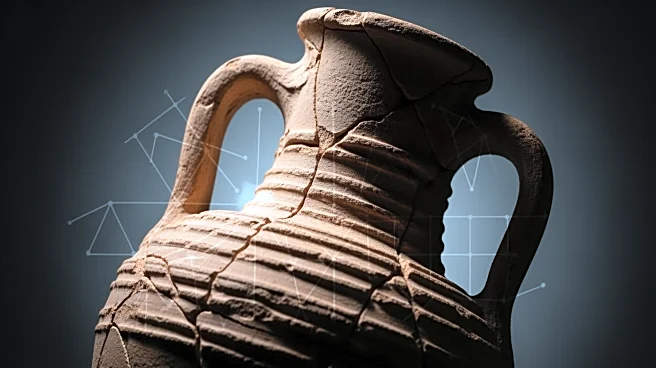
A recent study utilized X-ray microscopy (XRM) to analyze the microstructure of a Roman amphora, revealing insights into its manufacturing techniques. The analysis showed a fine and compact matrix with
mineral inclusions and pores, indicating the use of wheel-throwing techniques. The study identified a denser outer layer, suggesting variations in density due to thermal or mechanical processes during shaping and firing. X-ray powder diffraction (XRPD) and ED-XRF analyses further revealed the mineralogical composition, including quartz, diopside, and hematite, indicating high firing temperatures. The study provides a detailed understanding of the amphora's construction, highlighting the advanced techniques used in Roman pottery.
Why It's Important?
The findings offer valuable insights into ancient Roman manufacturing techniques, contributing to the broader understanding of historical craftsmanship and technological advancements. The study demonstrates the effectiveness of non-destructive analytical methods in archaeology, allowing researchers to explore ancient artifacts without damaging them. This research enhances the knowledge of cultural heritage and informs conservation strategies for preserving historical artifacts. The ability to identify specific manufacturing techniques and materials used in ancient times can also inform modern ceramic production and restoration practices.