



What's Happening?
Vice President JD Vance addressed anti-abortion activists at the annual March for Life rally in Washington, D.C., emphasizing the Trump administration's efforts to limit abortion practices. Vance praised the administration's expansion of the Mexico City
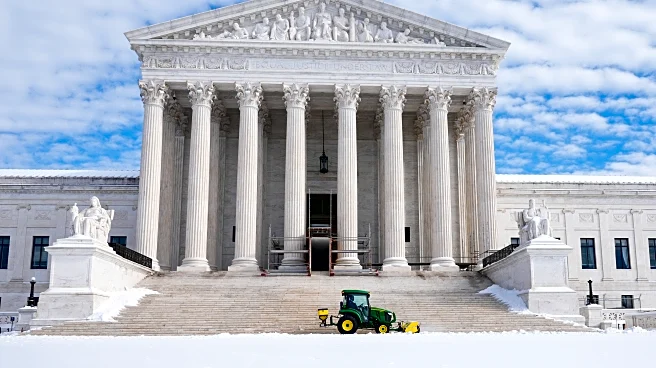
policy, which restricts U.S. foreign aid to groups supporting abortion services and those advocating for gender ideology and diversity, equity, and inclusion (DEI) programs. He highlighted the Supreme Court's 2022 Dobbs decision, which overturned Roe v. Wade, as a pivotal moment in the anti-abortion movement. Vance's remarks were part of a broader narrative celebrating the administration's conservative judicial appointments and policy changes aimed at promoting family values and human flourishing.
Why It's Important?
The rally and Vance's speech underscore the ongoing political and social battles over abortion rights in the United States. The Trump administration's policies have significantly influenced the national discourse on reproductive rights, with the Dobbs decision marking a shift towards state-level regulation of abortion. This development has energized anti-abortion advocates and reshaped the landscape of reproductive health policy. The expansion of the Mexico City policy reflects a broader agenda to align U.S. foreign aid with conservative values, potentially affecting international relations and the operations of global health organizations. The rally serves as a reminder of the deep divisions within American society regarding reproductive rights and the role of government in personal health decisions.
What's Next?
Following the rally, anti-abortion activists are likely to continue their efforts to influence state legislatures and promote policies that restrict abortion access. The Trump administration's new rules on foreign aid are expected to be published in the Federal Register, formalizing the policy changes. These developments may prompt responses from advocacy groups, both domestically and internationally, who support reproductive rights and gender equality. The ongoing debate is expected to play a significant role in upcoming elections, as candidates and voters grapple with the implications of the Dobbs decision and the broader cultural and political shifts it represents.