
What's Happening?
A study conducted by researchers from the University of Maine and the University of Chicago has revealed significant inaccuracies in AI-generated depictions of Neanderthals. Using generative AI tools like
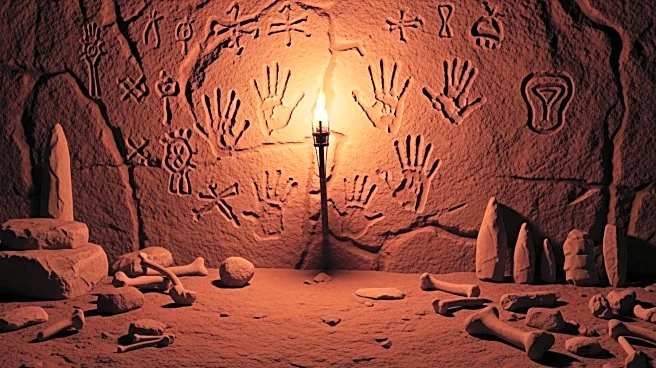
DALL E 3 and GPT 3.5, the researchers found that many AI-generated images and texts contained outdated ideas and biases. The study involved submitting prompts for Neanderthal scenes and comparing the results with current archaeological research. The findings showed that about half of the written responses and many images did not align with modern understanding, often depicting Neanderthals with traits from outdated reconstructions.
Why It's Important?
The study underscores the challenges and limitations of using AI in archaeological research and education. The inaccuracies in AI-generated content can perpetuate outdated stereotypes and misinformation about ancient human species. This has implications for how AI is used in educational settings and public outreach, potentially influencing public perception and understanding of human history. The research highlights the need for careful curation and validation of AI-generated content to ensure it reflects current scientific knowledge.
Beyond the Headlines
The study also points to broader issues of access to research materials, as many recent archaeological articles are behind paywalls, leading AI to rely on older, more accessible sources. This can result in a skewed representation of historical knowledge. Additionally, the limited representation of women and children in AI-generated scenes reflects social biases present in older academic and popular sources, emphasizing the need for more inclusive and accurate portrayals in AI applications.