

What's Happening?
Prime Minister Benjamin Netanyahu and United States President Donald Trump are scheduled to meet in Washington, DC, to discuss the ongoing US-Iran nuclear negotiations. The meeting, announced by the Prime Minister's Office, is set to address key issues
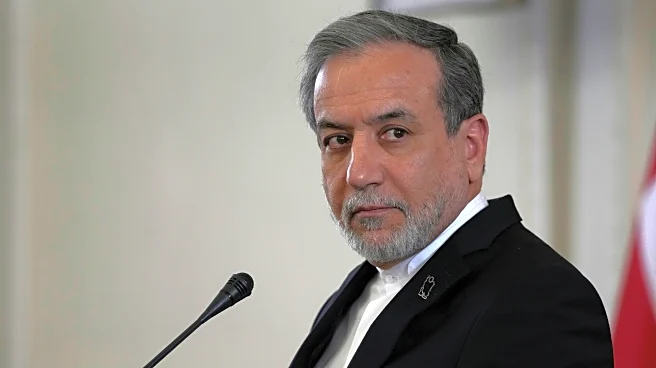
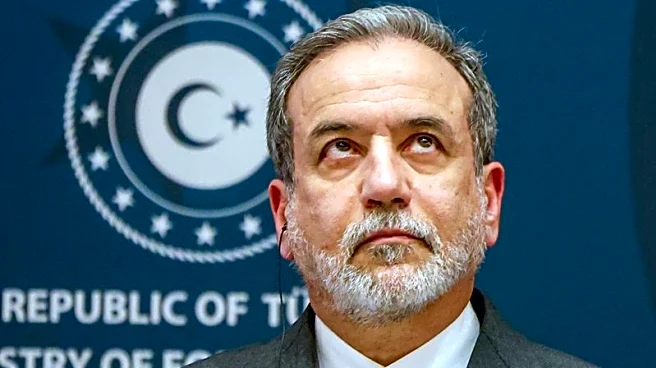
such as limiting Iran's ballistic missile capabilities and ending its support for regional proxies. President Trump has described recent talks with Iran in Muscat, Oman, as 'very good,' indicating a willingness from Iran to negotiate, albeit with the stipulation that Iran will not be allowed to develop nuclear weapons. Iranian Foreign Minister Abbas Araghchi, however, has stated that Iran's ballistic missile program is non-negotiable, highlighting a significant point of contention in the discussions.
Why It's Important?
The meeting between Netanyahu and President Trump is significant as it underscores the ongoing geopolitical tensions surrounding Iran's nuclear ambitions and regional influence. The outcome of these discussions could have far-reaching implications for Middle Eastern stability and US foreign policy. A potential agreement could lead to a reduction in regional tensions and a shift in alliances, impacting global oil markets and international relations. Conversely, failure to reach a consensus could exacerbate existing conflicts and lead to further economic sanctions or military confrontations, affecting global security and economic stability.
What's Next?
Following the meeting, further negotiations between US and Iranian officials are expected to continue, with both sides likely to seek a compromise on contentious issues such as missile development and regional influence. The international community, including European allies and regional powers, will be closely monitoring the outcomes, as any agreement or escalation could influence their diplomatic and economic strategies. Additionally, domestic political reactions in the US and Israel may shape future policy directions and public opinion regarding the negotiations.