



What's Happening?
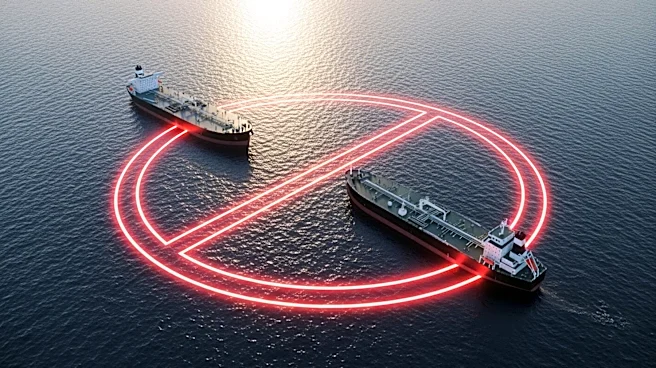
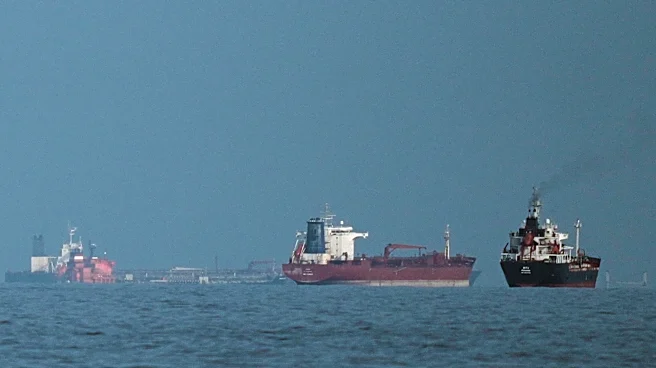
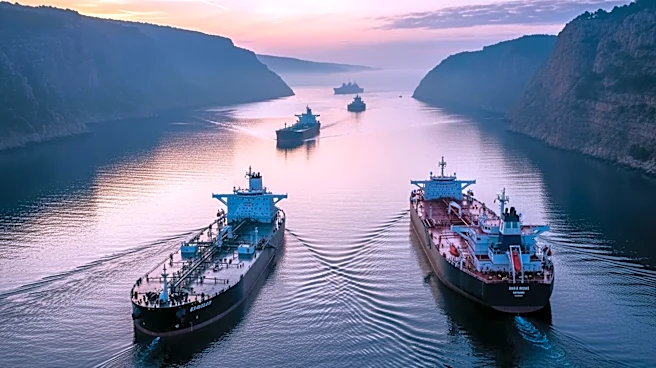
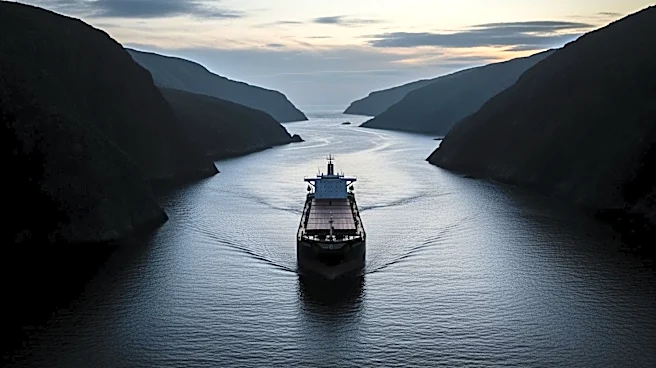
On the first day of the U.S. blockade on vessels calling at Iranian ports, a third Iran-linked tanker entered the Gulf via the Strait of Hormuz. President Trump announced the blockade following unsuccessful peace talks between the U.S. and Iran. The blockade does
not apply to vessels not heading to Iranian ports, allowing some tankers to continue their routes. The Panama-flagged Peace Gulf tanker is heading to Hamriyah port in the UAE, typically transporting Iranian naphtha to non-Iranian ports for export to Asia. Two U.S.-sanctioned tankers have also passed through the strait, including the Rich Starry, which is carrying methanol and is owned by a Chinese company sanctioned by the U.S.
Why It's Important?
The blockade represents a significant escalation in U.S.-Iran tensions, impacting global shipping routes and potentially disrupting oil and petrochemical exports from the region. The Strait of Hormuz is a critical chokepoint for global energy supplies, and any disruption could affect oil prices and international trade. The blockade may also strain U.S.-China relations, as Chinese-owned vessels are involved. The situation could lead to increased geopolitical instability in the Middle East, affecting U.S. foreign policy and military strategy.
What's Next?
The blockade's continuation may lead to further diplomatic efforts or military actions to ensure compliance. The U.S. may face international pressure to resolve the situation, especially from countries reliant on Middle Eastern oil. Monitoring of tanker movements will continue, with potential sanctions or military interventions if vessels attempt to breach the blockade. The situation may also prompt discussions on alternative energy routes and sources.