







What's Happening?
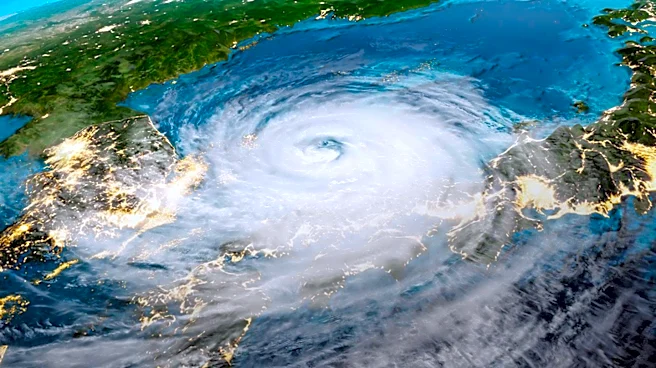
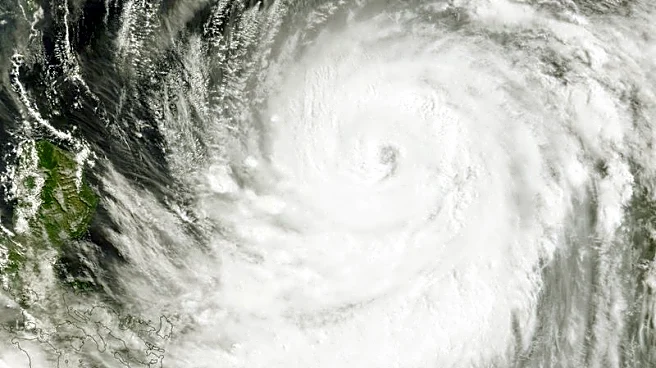
Typhoon Bavi made landfall in China's eastern Zhejiang province late on Saturday night, prompting the evacuation of more than 1.7 million people. The storm, which previously affected Japan's southern islands and Taiwan with strong winds and rain, is expected
to weaken gradually as it moves northwestward inland. Chinese authorities issued high alerts, suspended many schools and ferry services, and canceled hundreds of flights. Bavi is the second typhoon to impact China in just over a week, following Typhoon Maysak, which made landfall in southern China on July 3. The national weather agency issued an orange typhoon alert, the second-highest on a four-level scale, due to the significant risk posed by the large volumes of moisture in Bavi's rain bands.
Why It's Important?
The evacuation of over 1.7 million people underscores the severe impact of Typhoon Bavi on China's eastern regions. The storm's arrival comes shortly after Typhoon Maysak, highlighting the vulnerability of these areas to consecutive natural disasters. The disruption of flights, rail services, and the closure of schools and businesses could have significant economic repercussions, affecting local economies and the broader supply chain. The response to Bavi also tests the resilience and preparedness of Chinese emergency services, which have mobilized thousands of rescue workers. The situation highlights the ongoing challenges posed by extreme weather events, which are becoming more frequent and severe due to climate change.
What's Next?
As Typhoon Bavi continues to move inland, its weakening trajectory may reduce immediate threats, but the risk of flooding and landslides remains. Authorities will likely focus on recovery efforts, assessing damage, and restoring services. The response to Bavi could influence future disaster preparedness strategies, emphasizing the need for robust infrastructure and emergency planning. The international community may also monitor China's handling of the situation, as similar weather patterns could affect neighboring regions. Long-term, the frequency of such storms may prompt discussions on climate adaptation and mitigation strategies.